

How to Choose FPV Drone Motors for 6S Long-Range Drones
Short answer: for a 7-inch 6S long-range build, choose a 1200–1500KV motor with a 2807-class stator; on an 8-inch frame drop to 900–1200KV. Lower KV means more torque per amp and a lower cruise throttle, and that is the single biggest lever you have on flight time. The rest of this guide shows how to confirm that choice with real thrust data instead of marketing numbers.
Quick answer
- 7-inch, 6S, long range: 1200–1500KV · 2807-class stator · 7×3.5×3 propeller
- 8-inch, 6S, long range / cinematic: 900–1200KV · 3115-class stator
- Heavy-lift / agricultural / payload: 380–650KV
- Do not choose on KV alone. Magnet grade, copper fill, stator laminations and KV tolerance change what the motor actually does in the air.
1. Understand KV rating for a 6S build
KV is simply RPM per volt with no load. A 6S LiPo is 22.2V nominal and 25.2V fully charged, and the same frame can be flown with wildly different KV values. What makes one number right and another wrong is the propeller you bolt to it and how much of the flight you spend at cruise.
For long range the rule is simple: the bigger the propeller, the lower the KV. A large prop spinning at high RPM pulls an enormous current and will cook your ESC or sag the pack; a small prop at very low RPM never reaches an efficient operating point at all.
| Propeller size | Typical build | Recommended KV on 6S | Yadovex example |
|---|---|---|---|
| 5 inch | Freestyle / racing | 1800–2200KV | — |
| 6 inch | Long range | 1500–1700KV | — |
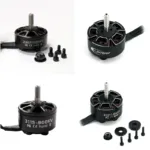
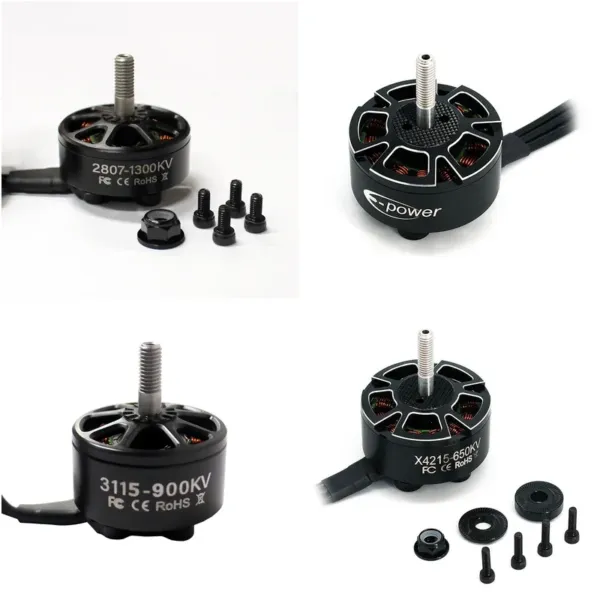
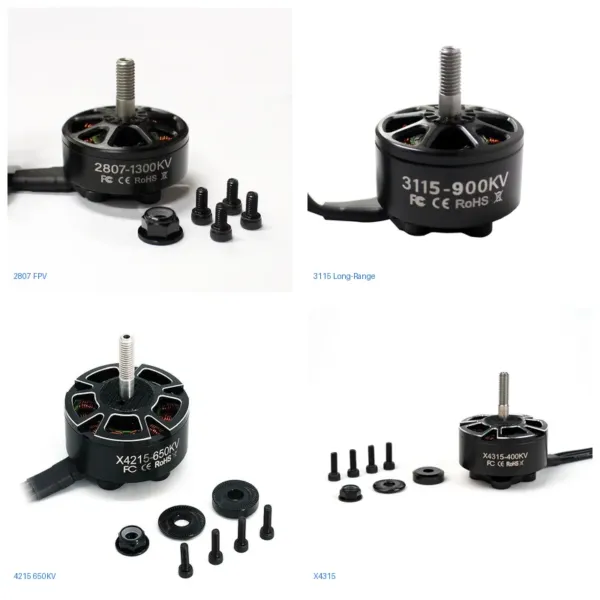
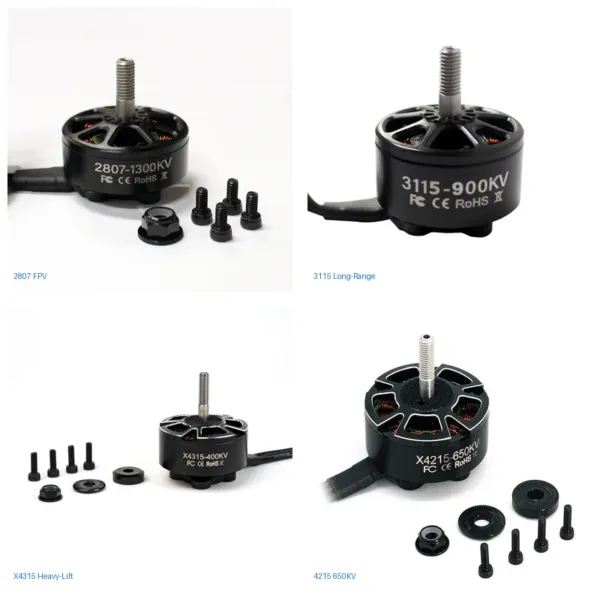
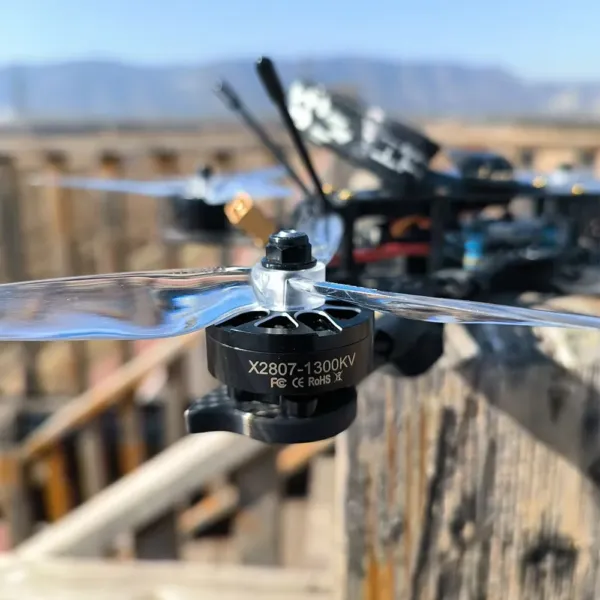
| 7 inch | Long range | 1200–1500KV | 2807 1300KV |
| 8 inch | Long range / cinematic | 900–1200KV | 3115 900KV |
| 9 inch and above | Heavy-lift / payload | 380–650KV | — |
Look at the last two columns together. The 2807 1300KV sits inside the 7-inch band and the 3115 900KV sits inside the 8-inch band. Both are 6S motors, and they are not interchangeable — putting the 900KV on a 7-inch frame leaves thrust on the table, while putting the 1300KV on a heavy 8-inch build pushes current past what the motor can cool.
2. Match the motor to your propeller
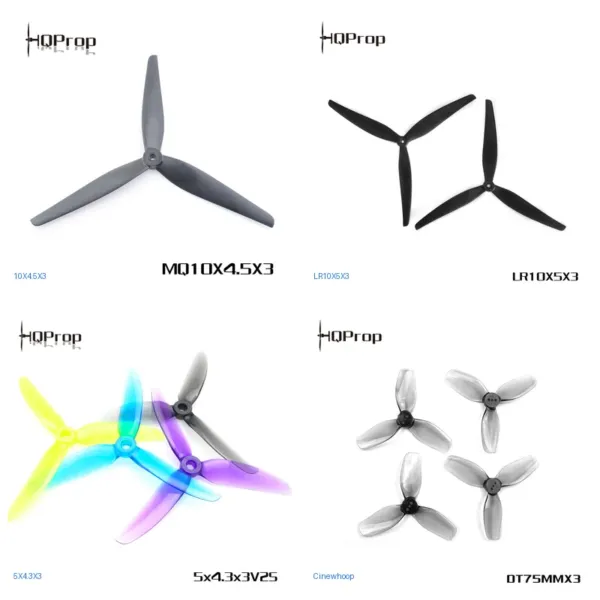
The propeller is the load, and the motor is the engine. Before you look at any motor spec sheet, decide the propeller, because that choice sets the current ceiling for the whole build. Pitch adds load quickly: a 7x4x3 pulls noticeably more current than a 7×3.5×3 on the same motor, and on a long-range quad you usually want the lower pitch.
| Propeller | KV range (6S) | What you get |
|---|---|---|
| 5×4.3×3 | 1800–2200KV | Punch and control, short flights |
| 6x4x3 | 1500–1700KV | Balanced mid-range cruiser |
| 7×3.5×3 | 1200–1500KV | The long-range sweet spot |
| 8x4x3 | 900–1200KV | Maximum efficiency, slower response |
| 9–15 inch | 380–650KV | Heavy lift, agricultural spraying |

One warning about static thrust tables: test data taken on a bench rig tells you the current at full throttle, but long range happens between 30% and 50% throttle. A motor with slightly lower peak thrust and a flatter efficiency curve will outlast a “stronger” motor that is already hot at cruise. Ask for the full curve, not the headline number.
3. Stator size and weight
The stator is the metal core the windings sit on, and “2807” means a 28mm stator with a 7mm stack. More stator volume means more torque and better heat rejection, but also more grams — and grams are the enemy on a long-range build.
For most 7-inch 6S long-range quads, a 2807 or 3112-class stator is the practical sweet spot: enough torque for a 7×3.5×3 to accelerate out of trouble, without carrying the mass of a heavy-lift can. Bigger motors (3115, 3215) only pay off when the prop is bigger than 7 inches or the payload is genuinely heavy — otherwise you are lifting motor instead of battery.
Watch: 2807 motors being built on our production line
This is unedited footage from the workshop floor where our 2807 motors are produced. It matters because the assembly stage is exactly where the differences in the table above are decided — magnet grade, how tightly the stator is wound, and how each unit is balanced before it leaves. It is the same line that supplies the 2807 1300KV we recommend for 7-inch 6S long range, so you can see what you are actually buying instead of reading a spec sheet about it.

2807 brushless motor production line — Yadovex Drone Parts (watch on YouTube)
4. Read the thrust and efficiency curve, not the spec sheet
Never buy a motor from a spec sheet alone. Three numbers matter: thrust at your cruise throttle, current at that throttle, and motor temperature after a full pack.
- Efficiency at cruise (g/W): the higher, the longer you fly. This is the number that decides range.
- Current at 50% throttle: compare it across candidates on the same propeller. A motor that reaches the same thrust with less current runs cooler and further.
- Temperature after the pack: warm is fine, too hot to hold means the windings are being cooked and the magnets will lose strength over time.
A useful long-range motor produces strong thrust at a moderate current draw, so you spend the flight at low throttle. If two motors claim the same peak thrust but one needs 15% more current to hold cruise, that difference is range you will never get back.
5. Why two “2807 1300KV” motors are not the same motor
This is the part most buying guides skip, and it is the part that decides whether your build flies like the reviews or lands hot after eight minutes. Two motors can carry identical model numbers and identical KV labels and still behave completely differently, because the KV number says nothing about how the motor was built.
| What varies | Low-cost build | Well-built motor | What you feel in flight |
|---|---|---|---|
| Magnet grade | Standard N45 | N52 or high-temperature N45SH | Torque per amp, and whether power fades as the motor heats |
| Copper fill / winding | Hand-wound, loose slots | High copper fill, single-strand where it counts | Resistance, heat, and thrust at low throttle |
| Stator laminations | 0.35mm | 0.20mm | Lower eddy-current loss — measurable at cruise |
| Bearings | Unbranded, loose tolerance | Branded with defined radial play | Vibration, bearing noise, and how long it lasts |
| KV tolerance | ±10% batch to batch | ±5% and tested per unit | Whether your four motors actually match |
| Balancing and QC | Sample check | Every unit spun and measured | Jello in video, and motors that fail in month three |
A ±10% KV spread is the quiet one. Four motors labelled 1300KV can actually sit between 1170KV and 1430KV — a difference you will feel as the quad drifting under hard throttle, and one that no amount of tuning fully removes. A 5% spread across a matched set is worth more than an extra 30 grams of claimed thrust.
Five questions to ask any motor supplier before you place an OEM order:
- Which magnet grade do you use, and what is the maximum operating temperature?
- What is the measured KV tolerance per unit, not per batch?
- What stator lamination thickness is used?
- Which bearing brand and radial play?
- Do you provide thrust, current and temperature data for the exact motor-prop combination I am buying?
Any factory worth importing from answers all five without hesitation. If a supplier cannot answer question two, they are not measuring their own output, and the KV on the label is a marketing decision rather than a measurement.
6. 6S long-range build checklist
- Propeller first: 7×3.5×3 for a 7-inch long-range quad — this sets everything else.
- KV band: 1200–1500KV for 7-inch, 900–1200KV for 8-inch.
- Stator: 2807 or 3112 class for most 7-inch builds.
- Battery: 6S Li-ion or LiPo, 2200–4000mAh. Li-ion gives more capacity per gram for pure cruise.
- ESC: rated above the motor’s maximum current with headroom — check the thrust table at full throttle.
- Frame: stiff and light. Frame flex wastes efficiency before any motor choice does.
- OEM options: custom KV, cable length, connector, colour, logo and packaging are all available on factory orders.
7. Frequently asked questions
What KV motor should I use for a 6S long-range drone?
For a 7-inch 6S long-range quad, 1200–1500KV. For an 8-inch build, 900–1200KV. Lower KV keeps the cruise throttle low, which is what actually extends flight time.
Is 1300KV good for a 7-inch 6S build?
Yes. 1300KV sits inside the recommended 1200–1500KV band for 7-inch 6S long range, and it is one of the most popular choices for that frame size because it balances thrust with efficiency on a 7×3.5×3 propeller.
What is the best propeller for a 6S long-range 7-inch drone?
A 7×3.5×3 is the usual starting point. It keeps current draw moderate and lets you cruise at low throttle. Move to a higher pitch only if your build is light and you want more response.
Why do two motors with the same KV perform differently?
Because KV describes the winding ratio, not the build quality. Magnet grade, copper fill, stator lamination thickness, bearing quality and per-unit KV tolerance all change thrust, heat and efficiency without changing the number on the box.
Can I order a custom KV or custom cable length?
Yes. Custom KV, cable length and connector, colour, logo and retail packaging are all available for OEM orders — tell us the specification you need and we will quote it.
Browse the ranges used in this guide: drone motors | long-range FPV motors | FPV racing and freestyle motors.
Final verdict
For a 6S long-range FPV drone, start with a 7-inch frame, a 1200–1500KV motor on a 2807-class stator, and a 7×3.5×3 propeller — for example a 2807 1300KV. If you are building 8-inch, step down to 900–1200KV. Then verify the choice with thrust, current and temperature data at cruise throttle rather than at full throttle, and check the KV tolerance before you buy a set of four.
Need help matching a motor to your frame and propeller? Contact our team or message us on WhatsApp with your frame size, propeller and target flight time — we will recommend a specific motor and send the test data for that exact combination.

Hallen Liu is a product and sourcing specialist at Yadovex, a China-based supplier of FPV and UAV brushless motors, servos and propellers. He works directly with drone builders, distributors and OEM buyers on motor selection, thrust-test data, custom KV and OEM/ODM orders — from sample validation through repeat bulk shipments.

2 Comments