Brushless Servo Motor Explained: How They Work, Specs and When to Use One
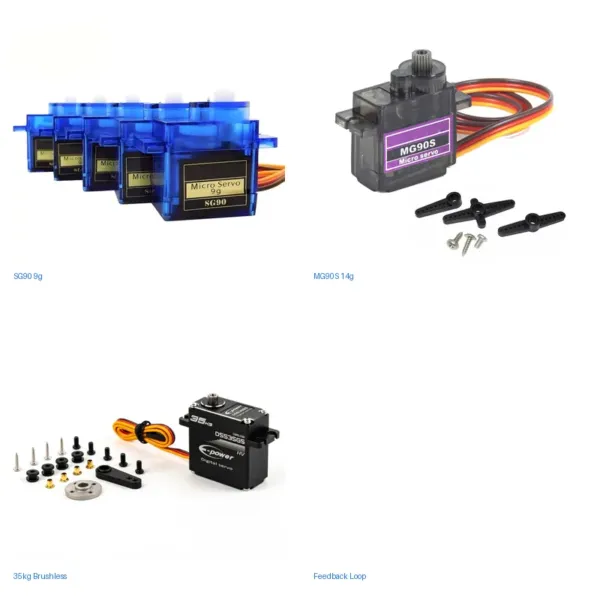
A brushless servo motor replaces the brushed DC motor inside a conventional servo with a sensorless or sensored brushless motor, which eliminates brush wear and delivers longer life, higher torque density and smoother holding at high loads. The practical difference: a brushed servo typically lasts 100-300 hours of heavy use and loses torque as the brushes wear, while a brushless servo like Yadovex’s HB series runs far longer with consistent 25-70 kg·cm torque, works at 6-15V, and can be sealed waterproof (IP67 on the HB45-60KG models). Choose a brushless servo when you need continuous heavy-duty operation, waterproofing, or high-voltage performance — for RC cars, crawlers, boats, robot arms and industrial builds.
- Core advantage: no brushes to wear out — longer lifespan, higher torque density and smoother operation under load.
- Voltage flexibility: brushless servos handle 6-15V (high-voltage models), giving more speed and torque than 4.8-6V brushed units.
- Waterproof builds: sealed brushless servos (IP67 rated) survive boats, crawlers and outdoor robots.
- Torque range: Yadovex HB/HV brushless servos cover 25-70 kg·cm, from RC cars to heavy-duty industrial joints.
How a Brushless Servo Works (and Why It Lasts Longer)
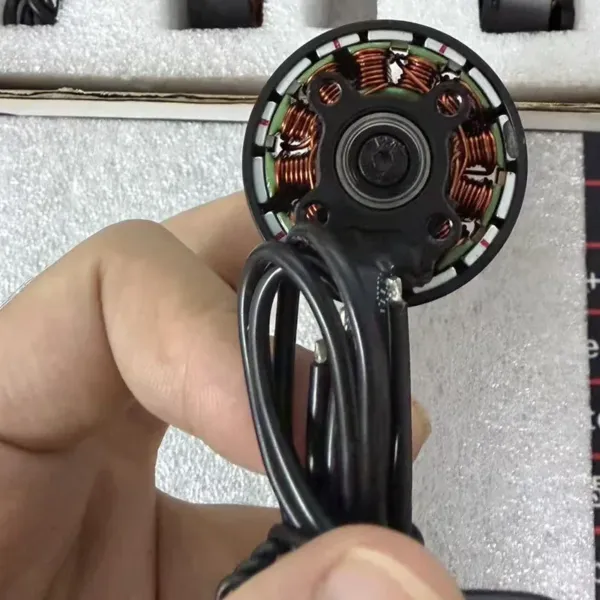
A brushless servo motor uses an electronic controller to switch current between stator coils instead of physical brushes rubbing against a commutator. That design change removes the single most common failure point in a servo — brush wear. Here is the comparison at the component level:
| Feature | Brushed servo | Brushless servo |
|---|---|---|
| Wear parts | Brushes + commutator wear out | None — no physical contact |
| Lifespan | Shorter under heavy use | Much longer, consistent torque |
| Torque density | Lower per gram | Higher per gram |
| Voltage range | Typically 4.8-6V | 6-15V (high-voltage capable) |
| Heat | Runs hotter under load | Runs cooler, holds torque longer |
| Cost | Lower | Higher, but lower long-term cost per hour |
That is why industrial robot arms, heavy RC cars, crawlers and boat rudders increasingly use brushless servos — the application runs the servo under load for long periods, exactly where brushed motors fail first.
Brushless Servo Specs: The Yadovex HB and HV Series
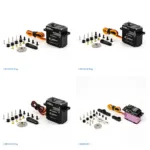
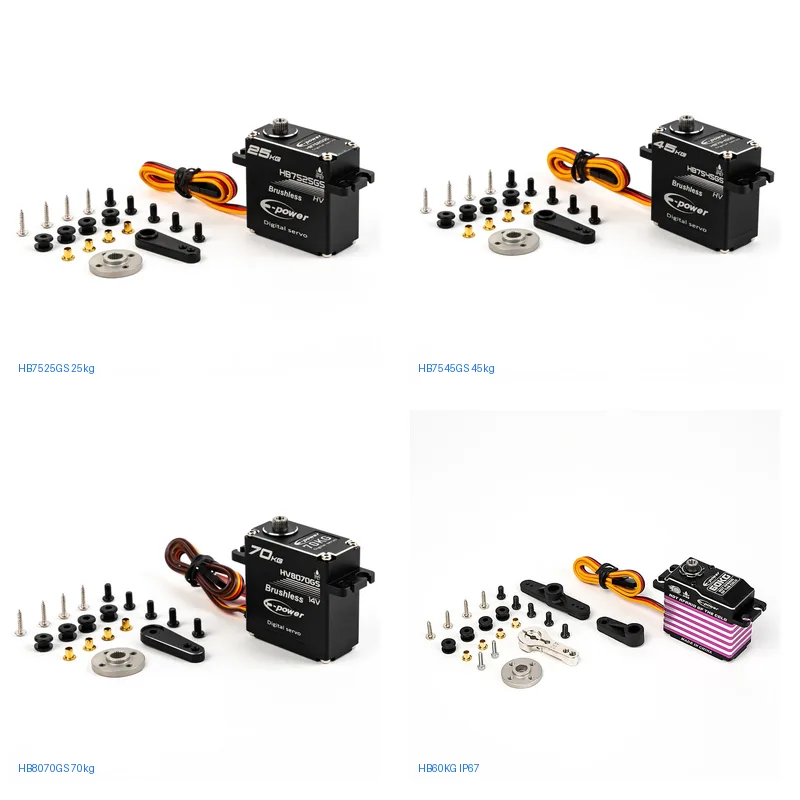
Yadovex builds two brushless waterproof families. The HB series covers 25-70 kg·cm, and the HV series adds high-voltage models. Here are the key specifications from our product pages:
| Model | Torque | Voltage | Key features |
|---|---|---|---|
| HB7525GS | 25 kg·cm | 6.0-8.4V | Aluminum alloy, 2BB, waterproof |
| HB7535GS | 35 kg·cm | 6.0-8.4V | Aluminum alloy, 2BB, waterproof |
| HB7545GS | 45 kg·cm | 6.0-8.4V | Aluminum alloy, 2BB, waterproof |
| HB8070GS | 70 kg·cm | 10-15V | High-voltage, aluminum alloy, waterproof |
| HB60KG | 60 kg·cm | 10-15V | IP67, aluminum housing, 3BB |
| HV8050GS | 50 kg·cm | 10-15V | High-voltage, waterproof |
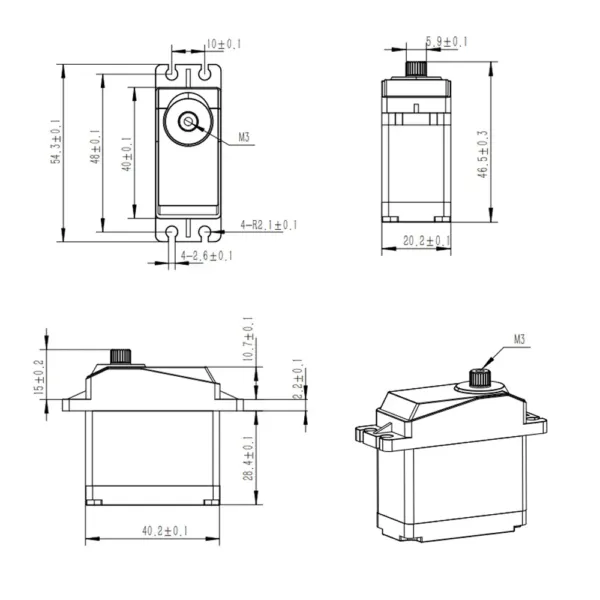
All HB and HV models support 180°, 270° or 360° rotation, use metal gears with aluminum alloy housings, and ship with JR JST connectors. The 180°/270°/360° option matters: pick 180° for steering and standard controls, 270° for robot-arm joints, and 360° for continuous-rotation applications like winches or pan mechanisms.
When Do You Actually Need a Brushless Servo?
Not every build needs one. Use this decision guide to pick brushed or brushless:
- RC car / crawler steering: brushless if you run high-voltage (6S+ BEC or direct 10-15V) and want holding torque — the HB7525GS 25kg or HB7545GS 45kg are common picks.
- Boats and marine builds: brushless waterproof — the HB45KG (IP67) is built for rudders and trim tabs that live in splash zones.
- Robot arms and industrial joints: brushless for continuous duty — the HB60KG or HB8070GS 70kg handle repeated heavy cycles without sagging.
- Light planes, gliders and micro builds: brushed micro servos are still the right call — weight and cost win there (see our micro servo guide).
The one-line rule: if the servo works hard for long periods, or lives where water can reach it, go brushless.
Understanding Waterproof Ratings: IP67 on Servos
Waterproofing matters more than most buyers think. A servo rated IP67 (like the HB45KG-60KG series) is fully protected against dust and can be submerged up to 1 meter for 30 minutes — that is the difference between a servo that survives a creek crossing and one that dies on the first splash. The HB GS series (HB7525GS etc.) is waterproof-sealed for splash protection without the full IP67 rating, which keeps cost down for builds that only see light spray.
Brushless Servo vs Coreless Servo: Know the Difference
People often confuse brushless servos with coreless servos, but they solve different problems. A coreless servo uses a coreless DC motor — no iron core in the armature — which makes it extremely fast and responsive with very low inertia. A brushless servo uses an electronically commutated motor with no brushes at all. Both improve on a standard brushed motor, but in different directions:
- Coreless: fastest response and lowest weight per torque — ideal for airplane control surfaces and high-speed applications that need instant reaction.
- Brushless: longest lifespan, highest torque density and waterproof potential — ideal for continuous heavy-duty work, high-voltage systems and wet environments.
- Combined: a brushless servo is the better all-rounder for durability; a coreless servo wins where pure speed and light weight matter most.
Yadovex offers both lines — the coreless digital series for speed-focused builds and the brushless HB/HV series covered in this guide for heavy-duty work. If you are not sure which fits, tell us your application and we will recommend the right motor technology.
Powering Your Brushless Servo Correctly
Brushless servos only deliver their rated torque when the voltage is right. Two rules keep your servo happy:
- Match voltage to the model: the HB GS series runs 6.0-8.4V; high-voltage models (HB8070GS, HV8050GS, HB60KG) need 10-15V. Feeding 10-15V into a 6-8.4V servo burns it out; under-powering a high-voltage servo leaves torque on the table.
- Check your BEC: a 5V BEC cannot drive a high-voltage brushless servo. Use a BEC or power supply rated for the servo voltage, and confirm the current rating — a 70 kg·cm servo under load can draw several amps in brief peaks.
Most HB/HV models include JR JST connectors with 300mm cable, which is compatible with standard receivers and gyros. For custom builds, Yadovex offers OEM/ODM options on cable length and connector type.
FAQ
What is the difference between a brushless and brushed servo?
A brushed servo uses physical brushes to switch motor current and wears out over time; a brushless servo uses electronic commutation with no wear parts. Brushless servos last longer, produce more torque per gram, run cooler and support higher voltages (6-15V), at a higher initial cost.
Are brushless servos worth it?
For heavy-duty applications — RC cars, crawlers, boats, robot arms, industrial joints — yes. The longer lifespan and consistent torque under load offset the higher price. For light planes and micro builds, a brushed micro servo is still the better value.
What voltage do brushless servos use?
Most brushless servos run 6.0-8.4V; high-voltage models run 10-15V. Check your BEC or ESC’s voltage output before choosing — a high-voltage servo needs a matching power source to deliver its rated torque.
Can a brushless servo be waterproof?
Yes. Sealed brushless servos like the Yadovex HB45KG-60KG series carry an IP67 rating (dust-tight, submersible to 1 m for 30 minutes). The HB GS series is waterproof-sealed for splash protection.
What does 360° continuous rotation mean on a servo?
A 360° servo rotates continuously instead of stopping at 180°, which suits winches, pan mechanisms and continuous-rotation robotics. The HB and HV series let you choose 180°, 270° or 360° operation for the same motor.
Do you offer custom brushless servos?
Yes. Yadovex is a servo manufacturer supporting OEM/ODM orders — custom torque, voltage, rotation range, cable length, connector and logo — with sample testing before bulk shipments.
Final Verdict
Choose the HB7525GS 25kg for a 6-8.4V crawler or car build, the HB7545GS 45kg when you need more steering authority, the HB60KG (IP67) for boats and outdoor robots, and the HB8070GS 70kg for heavy-duty industrial joints at 10-15V. Match the torque to the load with about 50% margin, confirm your BEC voltage, and pick the rotation range your application needs.
Need help choosing a brushless servo for your build? Contact Yadovex with your application, voltage and required torque — we will recommend the right model and can send samples for validation before bulk orders.

Hallen Liu is a product and sourcing specialist at Yadovex, a China-based supplier of FPV and UAV brushless motors, servos and propellers. He works directly with drone builders, distributors and OEM buyers on motor selection, thrust-test data, custom KV and OEM/ODM orders — from sample validation through repeat bulk shipments.