

Filter By
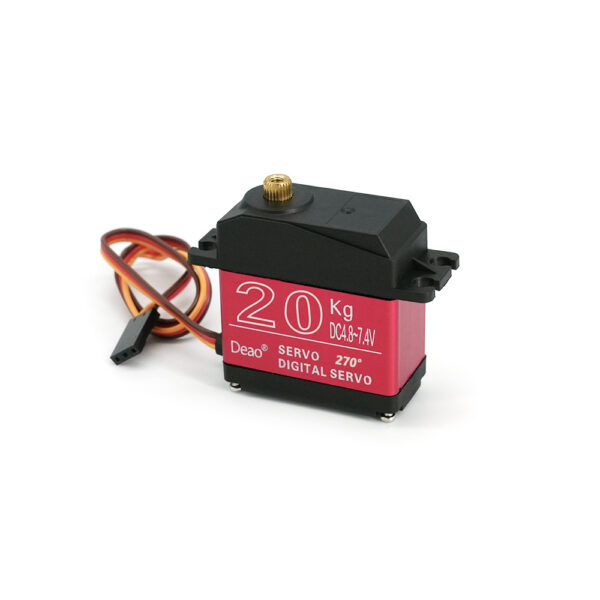
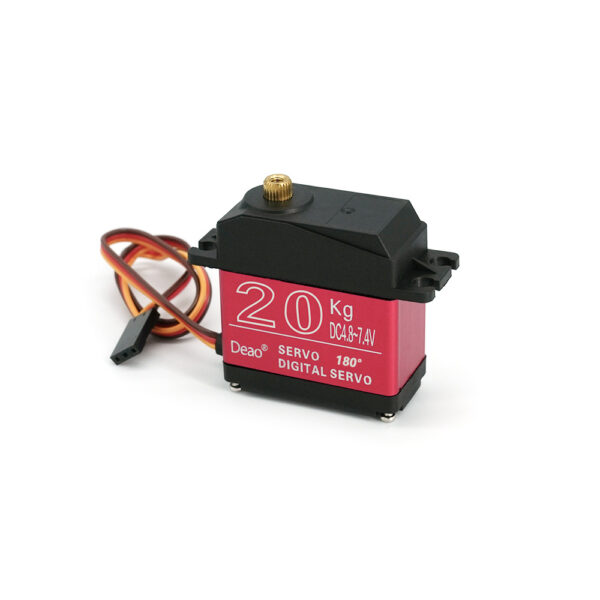
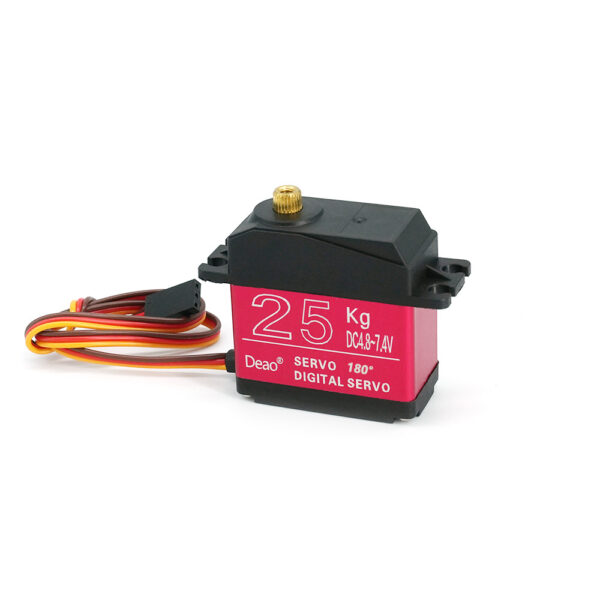

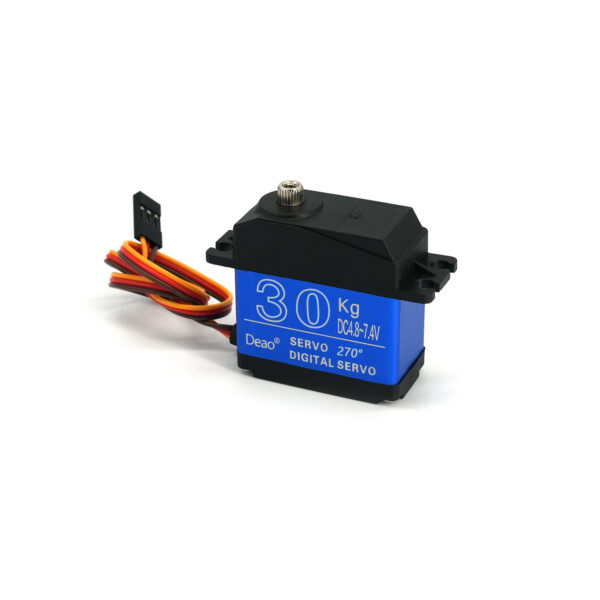

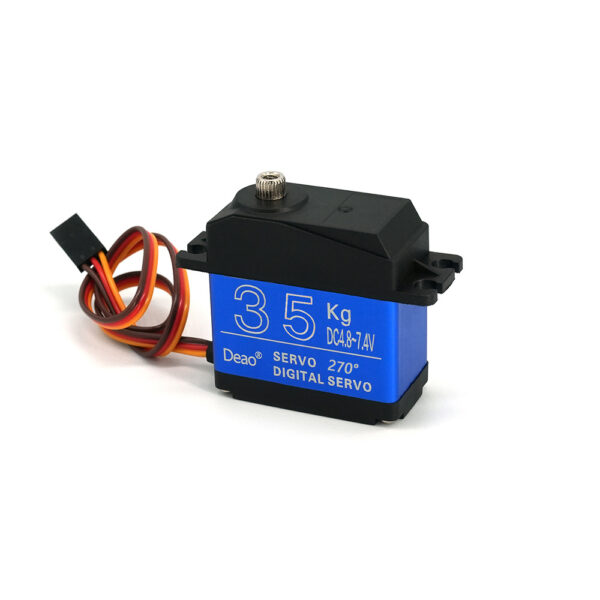
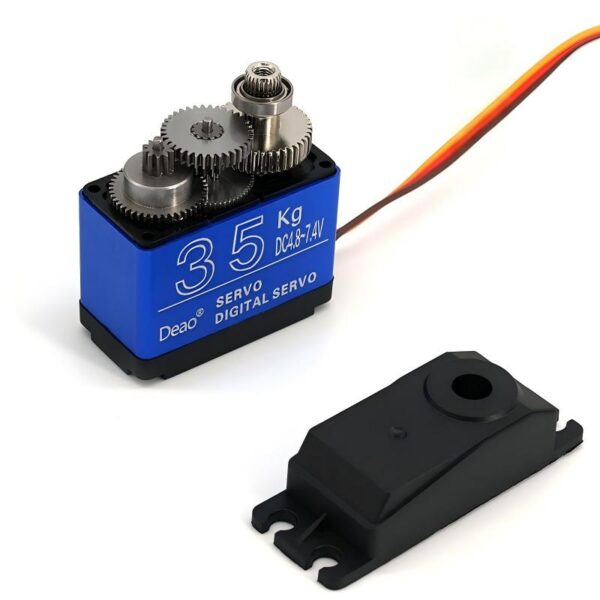
A robot servo motor has to hold position under load, not just move quickly. These digital servos cover 20kg to 70kg of torque with metal gear trains and 180 or 270 degree travel for robotic arms, grippers and bionic hands.
Torque and Speed for Robot Joints
A joint needs enough holding torque to resist the load at the end of the arm, which grows with arm length. Measure the load at the joint, not at the gripper.
Digital Control: Dead Band, PWM and Feedback
Digital servos hold position more precisely and respond to smaller signal changes, which matters when several joints have to move together.
Metal Gear vs Coreless for Robotics
Metal gears take the stall loads that robot joints create; a coreless motor adds the smooth, fast response that small corrections in a position loop need.
Mounting, Horns and Arm Design
Check the mount pattern, horn spline and travel before you design the bracket. Most joint failures are mechanical, not electrical.
OEM and Bulk Supply
Custom torque, travel, cable and connector options are available for robotics and industrial orders.
Frequently asked questions
What servo for a robot arm?
A metal gear digital servo in the 20kg to 45kg class covers most small and mid-size arms.
How much torque to lift 1kg with a servo?
It depends on arm length: torque equals load times distance, so a 1kg load at 10cm needs about 10kg-cm plus margin.
Can servo motors be used for robotics?
Yes, hobby-style digital servos are widely used in robot arms, grippers and bionic hands.
Do you supply robot servos in bulk?
Yes, with custom travel, torque and connector options.
Popular models in this range
D5545GS 45KG coreless | D5555GS 55KG coreless | MG90S 14g micro servo

