Micro Servo vs Mini Servo: What Size Servo Do You Need? (9g to 70kg)
A micro servo is a small servo weighing 9-14 g that delivers 1.6-2.2 kg·cm of torque, while a mini servo is the next class up at roughly 20-35 g with 2-4 kg·cm. For most RC planes, small robots and camera gimbal projects, a 9 g micro servo (like the SG90) or a 14 g metal-gear micro servo (like the MG90S) is all you need — choose the 9 g for the lightest builds and the 14 g metal-gear version when you need extra durability. Step up to a 20-35 kg digital servo only when you are moving car, crawler, or robot-arm parts that need real force. This guide maps servo size classes to real applications with actual specs from our range.
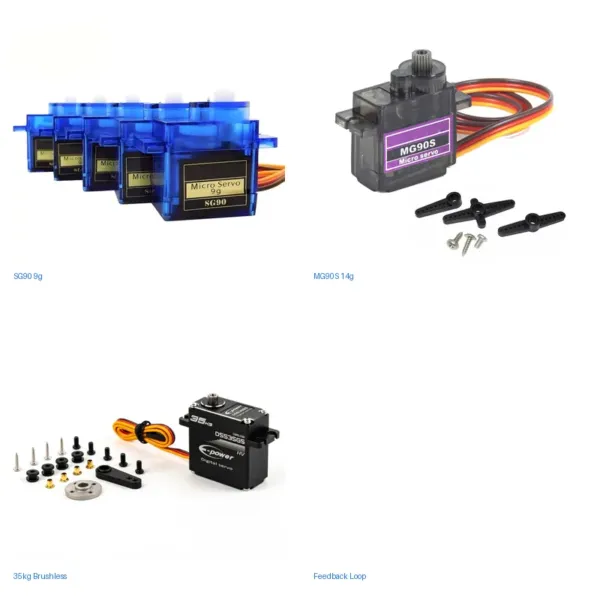
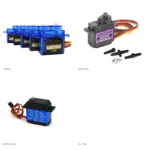
- 9 g micro servo (SG90): 1.6 kg·cm at 4.8V — the classic for small RC planes, gliders and light robots.
- 14 g metal-gear micro servo (MG90S): 1.8-2.2 kg·cm, metal gears — for crash-prone builds that need durability at micro weight.
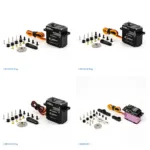
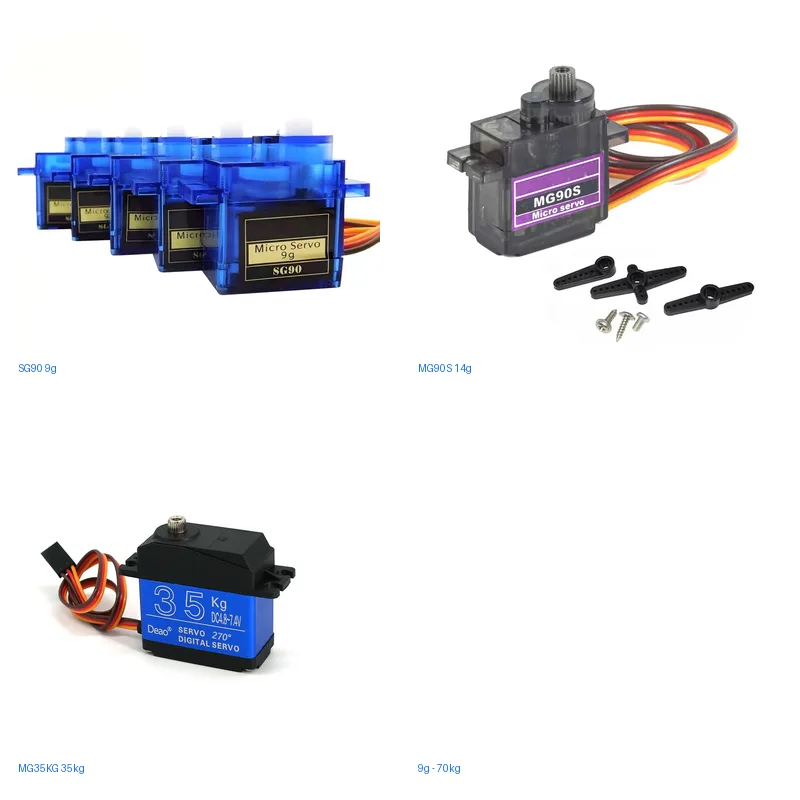
- Mini to standard (20-35 kg): MG20KG-MG35KG digital metal-gear servos for RC cars, crawlers and robot arms.
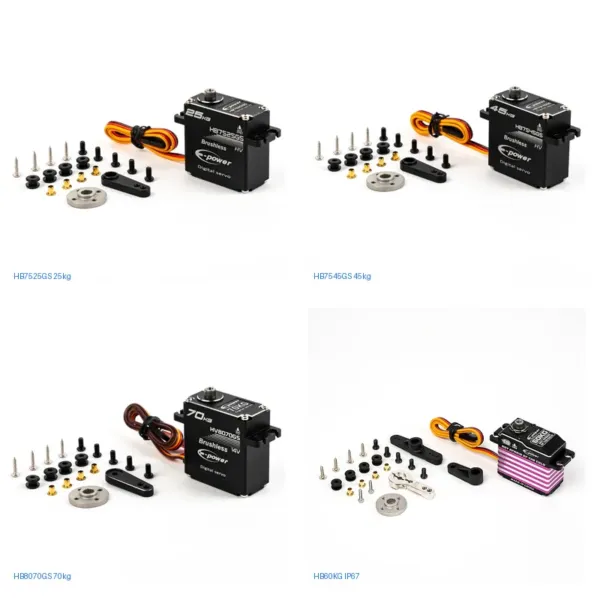
- Heavy-duty (35-70 kg): HB series brushless waterproof servos for industrial robots, boats and heavy RC models.
Micro Servo vs Mini Servo: The Size Classes
Servo naming is loose, so the reliable way to compare is by weight and torque. Here are the classes that matter for drone, RC and robotics builders:
| Class | Weight | Typical torque | Typical use |
|---|---|---|---|
| Micro | 9-14 g | 1.6-2.2 kg·cm | Small planes, gliders, light robots, gimbal tilt |
| Mini | 20-35 g | 2-4 kg·cm | Larger RC planes, small cars |
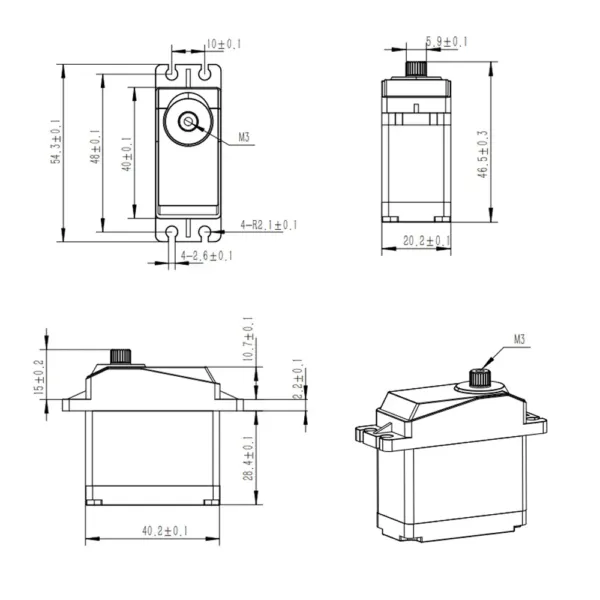
| Standard / high-torque | 40-80 g | 20-35 kg·cm | RC cars, crawlers, robot arms |
| Heavy-duty | 80-120 g+ | 35-70 kg·cm | Industrial robots, boats, heavy RC |
The jump from micro to heavy-duty is huge — 9 g to 100+ g, and 1.6 kg·cm to 70 kg·cm. Most builders over-spec: if your control surface or robot joint only needs 1-2 kg·cm, a micro servo saves 90% of the weight and all the battery drain.
The Two Micro Servos Everyone Starts With: SG90 vs MG90S
The two most common micro servos in the world are the SG90 and the MG90S, and Yadovex stocks both with published specifications:
| Spec | SG90 (9 g) | MG90S (14 g) |
|---|---|---|
| Weight | 9 g | 13.4 g |
| Torque | 1.6 kg·cm @4.8V | 1.8 kg·cm @4.8V / 2.2 kg·cm @6V |
| Speed | 0.1 s/60° @4.8V | 0.10 s/60° @4.8V / 0.08 s/60° @6V |
| Gears | Nylon | Metal |
| Voltage | 4.8V | 4.8-6V |
| Type | Analog | Analog |
| Rotation | 180° | 180° |
The rule between the two: pick the SG90 9g for the lightest possible build (small planes, gliders, lightweight robots) and the MG90S 14g when you want metal gears that survive crashes and heavier loads — the extra 4.4 g buys a lot of durability, plus the option to run at 6V for 2.2 kg·cm of torque.
How Much Torque Do You Actually Need?
Torque is what moves the control surface or joint. A practical way to estimate it: multiply the load arm length (in cm) by the force it must move (in kg). A servo holding a 5 cm control horn that needs 0.3 kg of force requires roughly 1.5 kg·cm — right at the SG90’s limit. If you need more margin, the MG90S at 6V gives you 2.2 kg·cm.
- Small plane elevator/rudder: 9 g micro servo is usually enough — most trainers use SG90-class servos.
- Robot arm small joints: MG90S metal-gear, because joints take repeated load and impacts.
- Camera gimbal tilt: micro servos work for lightweight action-camera gimbals, though brushless gimbal motors are better for video work.
- RC car steering / crawler: step up to 20-35 kg digital metal-gear servos like the MG20KG-MG35KG series — steering loads are much higher than flight surfaces.
When to Step Up: Digital, Metal-Gear and High-Torque Servos
Once your project outgrows micro servos, the next steps up in our range are the digital high-torque classes:
| Series | Torque range | Key features | Best for |
|---|---|---|---|
| MG20-35KG | 20-35 kg·cm | Digital, full steel / metal-copper gears | RC cars, crawlers, robot arms |
| HB7525-8070GS | 25-70 kg·cm | Brushless, waterproof, digital | Industrial robots, boats, heavy RC |
| HV8050-8055GS | 50-55 kg·cm | High-voltage brushless, waterproof | Heavy-duty professional builds |
These digital servos bring three advantages over an analog micro servo: faster response (digital signal processing), stronger holding torque, and programmability. They are the right choice for steering, crawler axles and robot arms — but they are overkill for a 300 g RC plane, where a 9 g micro servo does the job at a fraction of the weight and current draw.
Analog vs Digital: Does It Matter at Micro Size?
At the micro end, analog servos like the SG90 and MG90S are perfectly fine for most builds. Digital servos shine when you need precision holding and fast response under load — that is why the high-torque classes (MG, HB, HV series) are all digital. For a small plane or light robot, analog micro servos keep the build simple and the battery happy; for anything that steers or carries real load, go digital.
Servo Size Quick Reference by Project
If you are unsure where to start, use this project-based quick reference — it maps common builds directly to servo class:
| Project | Servo class | Why |
|---|---|---|
| Small RC plane / glider | 9 g micro (SG90) | Control surfaces need little torque; weight is critical |
| FPV fixed-wing | 9-14 g micro | Fast response at low weight for elevons and rudder |
| Micro robot arm | 14 g metal-gear (MG90S) | Metal gears survive repeated joint loads |
| RC car / crawler | 20-35 kg digital (MG series) | Steering needs high torque and holding strength |
| Industrial robot / boat | 35-70 kg brushless (HB/HV series) | Waterproof, high-torque, continuous duty |
One more rule: never exceed a servo’s rated voltage. The MG90S accepts 4.8-6V and delivers 2.2 kg·cm at 6V, but feeding a 4.8V-only servo (like the SG90) with 6V can overheat it. Check the spec sheet, then pick the class that matches your load with about 50% margin.
FAQ
What is the difference between a micro servo and a mini servo?
Micro servos weigh about 9-14 g and deliver 1.6-2.2 kg·cm of torque, used in small planes and light robots. Mini servos are the next class up at roughly 20-35 g with 2-4 kg·cm, used in larger RC planes and small cars.
Which is better, SG90 or MG90S?
It depends on the build. The SG90 (9 g) is lighter and ideal for the lightest planes and robots. The MG90S (14 g) has metal gears and higher torque (1.8-2.2 kg·cm vs 1.6 kg·cm), making it more durable for crash-prone or heavier-load builds.
How much torque do I need for my servo?
Multiply the load arm length in centimeters by the force in kilograms to estimate required torque in kg·cm. For most small plane control surfaces, 1.5-2 kg·cm is plenty; RC car steering needs 20 kg·cm or more.
Can I use a micro servo for a robot arm?
Yes for small, light joints — the MG90S with metal gears is a common choice for micro robot arms. For heavier joints, step up to digital metal-gear servos in the 20-35 kg·cm class like our MG series.
Are analog servos OK for FPV drones?
For fixed-wing FPV planes, analog micro servos are the standard choice for control surfaces. For quadcopters, servos are rarely used except for gimbal tilt — where brushless gimbal motors are preferred for smooth video.
Do you sell servos in bulk for production?
Yes. Yadovex is a servo manufacturer supporting OEM/ODM orders — custom torque, gears, cable length, connector and logo — with sample testing before bulk shipments. Contact us with your application for a recommendation.
Final Verdict
Start with the SG90 9g if weight is everything, or the MG90S 14g if you want metal-gear durability and 2.2 kg·cm of torque on 6V. If your project steers a car, drives a crawler, or lifts a robot arm, skip the micro class and go straight to the MG25KG 25 kg digital or the brushless waterproof HB series. Match the servo to the load, and you will never have a servo that is too weak — or too heavy.
Not sure which servo fits your project? Contact Yadovex with your application, weight and required torque — we will recommend the right class and can send samples for validation before bulk orders.

Hallen Liu is a product and sourcing specialist at Yadovex, a China-based supplier of FPV and UAV brushless motors, servos and propellers. He works directly with drone builders, distributors and OEM buyers on motor selection, thrust-test data, custom KV and OEM/ODM orders — from sample validation through repeat bulk shipments.