How to Choose a Brushless Motor for Drones: Size, KV, and Real Thrust Data
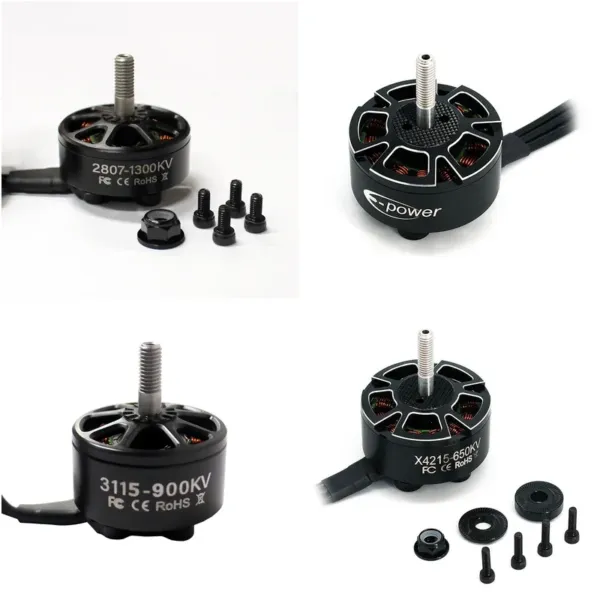
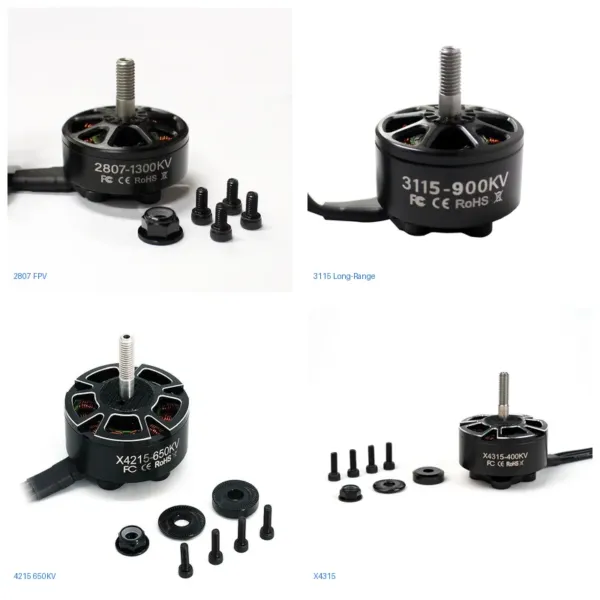
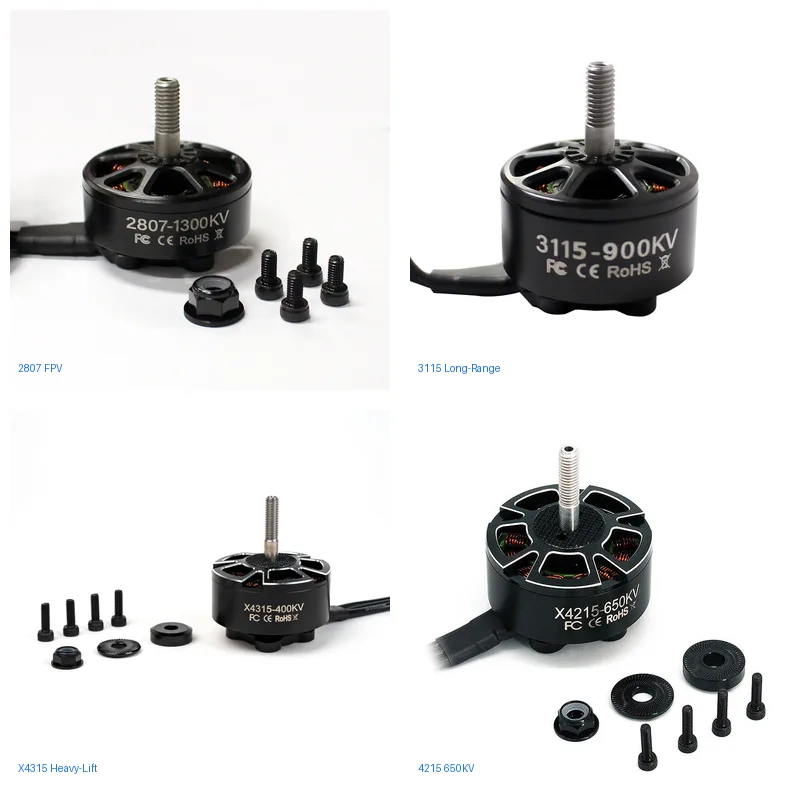
A brushless motor for a drone is chosen in three steps: pick the stator size by your propeller diameter, pick the KV by your battery voltage, then match the weight and power to your build class. A 5-inch FPV quad needs a 2207 or 2306 motor around 1700-2550KV; a 7-inch long-range build needs a 2807 at 1300-1500KV; a 10-inch platform needs a 3115-class motor at 900KV; and heavy-lift or agricultural drones use 13-inch props on 400-650KV motors. This guide maps the full Yadovex range with real specifications, including measured thrust figures on our 3115-900KV motor.
- 5-inch racing/freestyle: 2207 or 2306 motors, 1700-2550KV (31-34 g class).
- 7-inch long-range: 2807 motor, 1300-1500KV (56.4 g) with 7-inch props.
- 9-10 inch long-range/heavy-lift: 3115 at 900KV (107 g) — tested at 4.6-5.2 kg thrust per axis on 6S.
- 13-inch heavy-lift: X4315 or 4215 class, 400-650KV, up to 27 kg max thrust on the 4215.
- Agricultural/large platforms: BE6007, T5330 or BE6218, 160-220KV, 12S+ capable.
Step 1: Match Stator Size to Propeller Diameter
The stator size — the first two digits of a motor code like 2807 — is the primary driver of how much thrust a motor can produce. A larger stator moves more air with a bigger propeller; a smaller stator spins a small prop faster. The code reads as stator diameter x stator height in millimeters: a 2807 has a 28 mm stator diameter and 7 mm stator height.
| Stator class | Prop size | Build type | Yadovex examples |
|---|---|---|---|
| 2206 / 2207 / 2306 | 5 inch | FPV racing & freestyle | Wu2206, Wei2207, Shu2306, SF2306, XING2 2207/2306 |
| 2807 | 6-7 inch | Long-range & cinewhoop | 2807 900/1300/1500/1700KV |
| 2810 / 2812 / 3110 / 3112 / 3115 | 8-10 inch | Long-range & cross-country | 3115-900KV, 2812-900KV, 3110-900KV |
| 3515 / 4108 / 4215 / 4315 | 11-13 inch | Cinelifter & heavy-lift | 3515-400KV, X4108, 4215-650KV, X4315 |
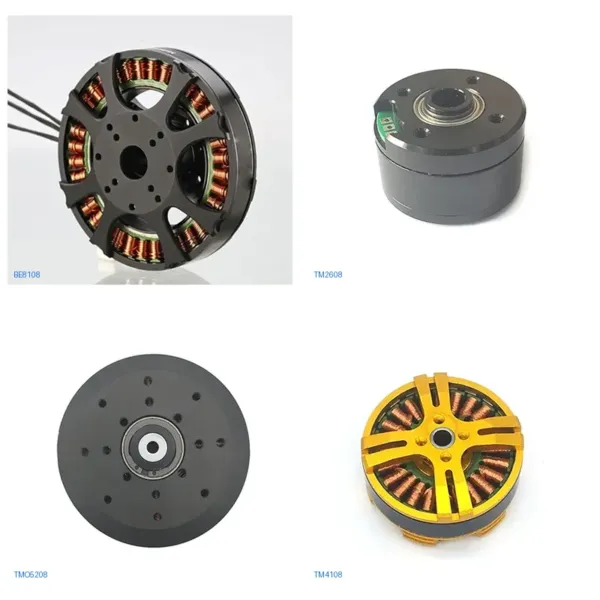
| 5208 / 6007 / 6218 / 5330 / 8108 | 14-24 inch | Agricultural & heavy payload | BE5208, BE6007, T5330, BE6218, BE8108 |
If you already know your prop size, this table gives you the motor class directly. The matching brushless motor category on our store groups these by use case, so you can browse by build type.
Step 2: Choose KV by Battery Voltage
KV is the motor speed per volt with no load — a 1300KV motor spins 13,000 RPM at 10V. The rule is simple: higher battery voltage needs lower KV to stay in the same RPM band, and lower battery voltage needs higher KV.
| Battery | Voltage | Typical KV range | Example |
|---|---|---|---|
| 3S-4S | 11.1-14.8 V | 1700-2800KV | XING2 2306 2555KV |
| 4S-6S | 14.8-22.2 V | 1300-1750KV | 2807 1300KV / 1500KV |
| 6S | 22.2 V | 900KV | 3115 900KV |
| 6S-12S | 22.2-50.4 V | 200-650KV | 4215 650KV, BE6218 200KV |
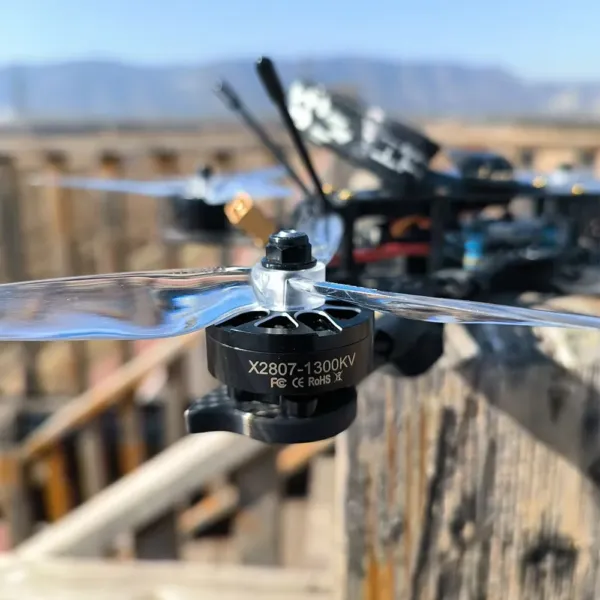
Pick the KV that matches the battery you want to fly. The 2807 1300KV, for example, is engineered for 6-7 inch props on 4S-6S packs — a proven long-range and freestyle choice. Going too high on KV with a large prop overheats the motor; going too low loses performance.
Step 3: Match Weight and Power to Your Build
Motor weight and power rating decide whether the motor fits your frame and delivers the thrust your all-up weight needs. As a rule of thumb, a multirotor should have at least 2:1 thrust-to-weight ratio — for a 1 kg quad, that means about 0.5 kg thrust per motor minimum.
| Motor | Weight | Key power figure | Best for |
|---|---|---|---|
| XING2 2207 1855/2755KV | 31.6 g | 5-inch racing | 5-inch quads |
| 2807 1300KV | 56.4 g | 7-inch props on 4-6S | 7-inch long-range |
| 3115 900KV | 107 g | 4.6-5.2 kg thrust/axis | 10-inch cross-country |
| X4315 400/500/600KV | 230 g | up to 1944 W | 13-inch heavy-lift |
| 4215 650KV | 224 g | 27 kg max thrust / 4200 W | 13-inch heavy-lift |
| BE6218 200KV | 370 g | agricultural class | agricultural drones |
All of these are in our shop, and most offer multiple KV winds — the X4315 ships in 400/500/600KV, and the 2807 series covers 900 to 1700KV so you can tune the same frame to different batteries.
What the Spec Sheet Really Tells You
Beyond size and KV, a few spec-sheet numbers separate a good motor from a mediocre one:
- Max power and peak current — the sustainable limit. The X4315 peaks at 54-83A depending on wind; pair it with an ESC rated above that.
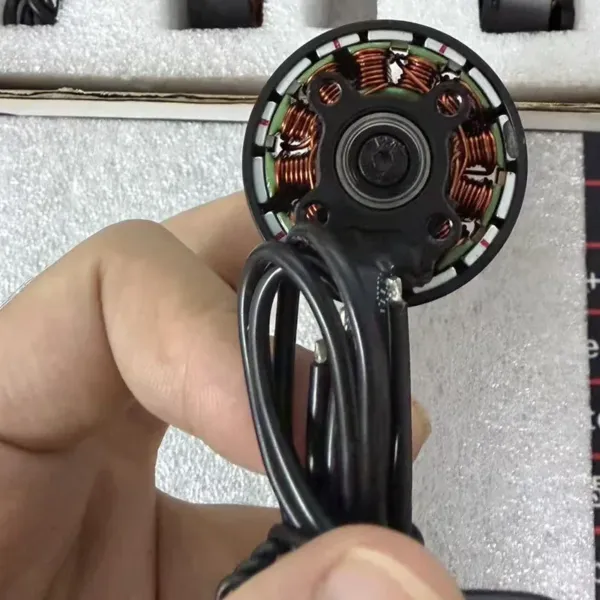
- Stator lamination and magnet grade — thinner silicon-steel laminations (0.15 mm) and N45SH-class neodymium magnets mean less loss and more torque per gram.
- Bearings — NSK/NMB ball bearings keep the rotor smooth and quiet over hundreds of flights.
- Idle/no-load current — a low idle current (like 0.8-1.3A on the X4315) indicates efficient windings.
This is also where a factory relationship matters: we can customize KV, shaft size, cable length, connector type, and even logo marking for OEM and ODM orders, and we test samples before bulk shipments.
Real Data: 3115-900KV on 6S
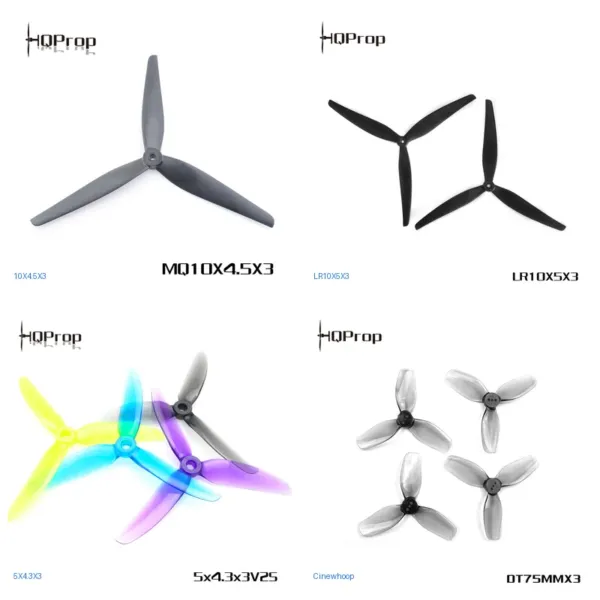
Here is what a real long-range motor does in practice. On 6S, the Yadovex 3115-900KV turns roughly 20,000 RPM no-load. With a 10×4.5 or 10×5 three-blade propeller it operates in its most efficient band, delivering around 4.6-5.2 kg of thrust per axis — enough for a 2-2.5 kg all-up X8/X9/X10 class airframe with margin.
At only 107 g excluding cables, the 3115 adds thrust and payload margin without the mass penalty of a heavy-lift can. Recommended props are 9×4, 9×5, 10×4.5 and 10×5, with 10×4.5 and 10×5 as the optimum — props above 10.5 inch push tip speed into the motor’s efficiency cliff, so they are not recommended. See the full spec on the 3115 900KV product page.
FAQ
How do I choose a brushless motor for my drone?
Start from the propeller diameter to pick the stator size, then pick the KV to match your battery voltage. A 5-inch quad needs a 2207/2306 at 1700-2550KV; a 7-inch build needs a 2807 at 1300-1500KV; a 10-inch platform needs a 3115-class at 900KV; heavy-lift needs 13-inch props on 400-650KV motors.
What does KV mean on a drone motor?
KV is the motor speed in RPM per volt with no load. A 1300KV motor spins about 13,000 RPM at 10V. Higher KV suits lower battery voltages and smaller props; lower KV suits higher voltages and larger props.
What size brushless motor do I need for a 5-inch drone?
A 2207 or 2306 motor in the 1700-2550KV range is the standard for 5-inch FPV quads, typically 31-34 g. Examples in our range include the XING2 2207/2306, Shu2306, SF2306, Wei2207 and Wu2206.
Can I use a 900KV motor on 4S?
Technically yes, but it will be underpowered — 900KV is designed for 6S. For 4S you want a higher KV (1500-1750KV range) to reach the same RPM. Match KV to the battery, not the other way around.
What is the difference between a drone motor and a gimbal motor?
A drone motor is a propulsion motor wound for high RPM and thrust on propellers. A gimbal motor is a low-KV, high-torque motor that holds a camera steady on a gimbal at low speed. They are not interchangeable — see our gimbal motor guide for that selection.
Do you offer custom KV and OEM motors?
Yes. Yadovex supports OEM/ODM customization including KV, shaft size, cable length, connector type, propeller adapter, logo marking and packaging, with sample testing before bulk orders. Contact us with your airframe and prop size for a recommendation.
Final Verdict
For a 5-inch FPV build, the iFlight XING2 2306 is the proven racing pick. For 7-inch long-range, the 2807 1300KV is the balanced choice. For 10-inch cross-country and cinematic work, the 3115 900KV delivers measured 4.6-5.2 kg thrust at just 107 g. And for heavy-lift or agricultural platforms, the 4215 650KV provides up to 27 kg of max thrust. Match the motor to your prop and battery, and you will not go far wrong.
Need help selecting? Contact Yadovex with your frame, propeller size and battery — we will recommend the right motor and KV, and can send samples for validation before bulk orders.

Hallen Liu is a product and sourcing specialist at Yadovex, a China-based supplier of FPV and UAV brushless motors, servos and propellers. He works directly with drone builders, distributors and OEM buyers on motor selection, thrust-test data, custom KV and OEM/ODM orders — from sample validation through repeat bulk shipments.