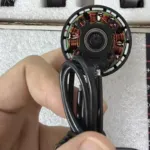

FPV Drone Motors Explained: X2807 vs X2812, KV and How to Read Motor Specs
FPV drone motors are sized by stator dimensions — the first two numbers are stator diameter and the next two are stator height — and KV tells you how fast the motor spins per volt; for a 5-inch freestyle quad you typically want a 2207 or 2306 motor around 1700–2000KV on 4S, while a 7-inch long-range build calls for a 2807 or 2812 motor around 900–1300KV on 6S. This guide decodes the numbers on any FPV motor, compares the X2807 and X2812 families with real spec-sheet data, and shows you how to read a motor spec like a builder instead of guessing.
Quick answer
- Motor size = stator diameter × height (e.g. 2807 = 28 mm stator, 7 mm height)
- KV = RPM per volt; lower KV for bigger props and higher battery voltage
- 5-inch freestyle/racing: 2207/2306, 1700–2000KV on 4S
- 7-inch long range: 2807/2812, 900–1300KV on 6S
- Heavier motors (2812) spin bigger props and carry more payload — at the cost of weight
How to Read an FPV Motor Name: 2207, 2306, 2807, 2812
Every FPV motor name encodes the stator size. The first two digits are the stator diameter in millimeters, and the last two are the stator height. A 2207 motor has a 22 mm stator that is 7 mm tall; a 2812 has a 28 mm stator that is 12 mm tall. This is the single most useful number on a motor — it tells you the power class before you read anything else.
| Motor | Stator (diameter × height) | Typical use |
|---|---|---|
| 2207 | 22 × 7 mm | 5-inch racing and freestyle |
| 2306 | 23 × 6 mm | 5-inch freestyle, cinewhoop |
| 2807 | 28 × 7 mm | 6-7 inch long range, cinematic |
| 2812 | 28 × 12 mm | 7-9 inch long range, heavy lift |
| 3110 / 3115 | 31 × 10 / 15 mm | 7-10 inch, long endurance |
Taller stator = more torque, more weight and more power draw. This is why a 2812 can swing a 9-inch propeller that a 2207 could never spin.
What Does KV Mean on a Drone Motor?
KV is the motor speed constant: roughly, the RPM the motor produces per volt applied. A 1300KV motor on a 6S pack (25.2V fully charged) spins at about 1300 × 25.2 ≈ 32,700 RPM at no load. Higher KV means faster spin with smaller propellers; lower KV means slower spin with larger propellers.
| Battery | KV range | Propeller | Style |
|---|---|---|---|
| 3S | 2300–2800KV | 5-inch | Racing, freestyle |
| 4S | 1700–2000KV | 5-inch | Racing, freestyle, cinewhoop |
| 6S | 900–1300KV | 6-7 inch | Long range, cinematic |
| 6S | 700–900KV | 8-10 inch | Heavy lift, endurance |
Rule of thumb: for the same propeller, halve the KV when you double the battery cell count — that keeps tip speed in the same efficient range.
X2807 vs X2812: Real Spec Comparison
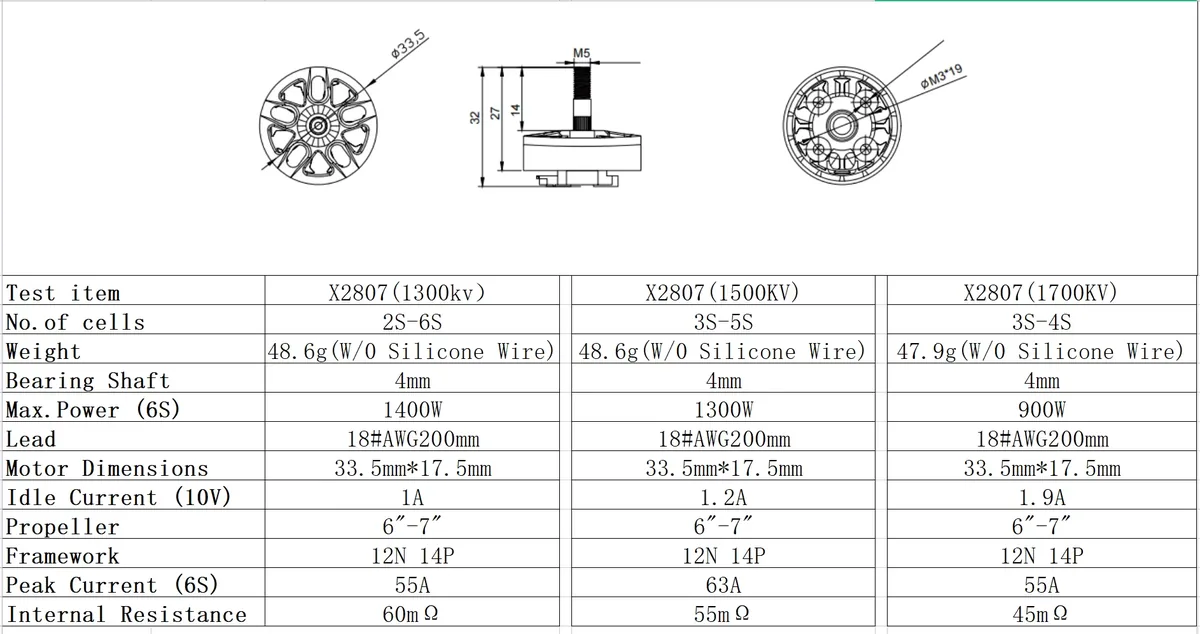
Both motors use a 28 mm stator, but the X2812 is 5 mm taller — and that changes everything. The taller stator gives the X2812 almost twice the torque potential, at the cost of 24 g more weight. Here is the spec-sheet data side by side:
| Spec | X2807 (1300KV) | X2812 (900KV) |
|---|---|---|
| Motor size | 33.5 × 17.5 mm | 33.5 × 22.5 mm |
| Weight | 48.6 g | 73 g |
| Shaft | 4 mm | 4 mm |
| Battery | 2S–6S | 2S–6S |
| Max power | 1400 W (6S) | 950 W (6S) |
| Peak current | 55 A | 40 A |
| Internal resistance | 60 mΩ | 68 mΩ |
| Propeller | 6–7 inch | 9 × 4.7 CF |
| Framework | 12N 14P | 12N 14P |
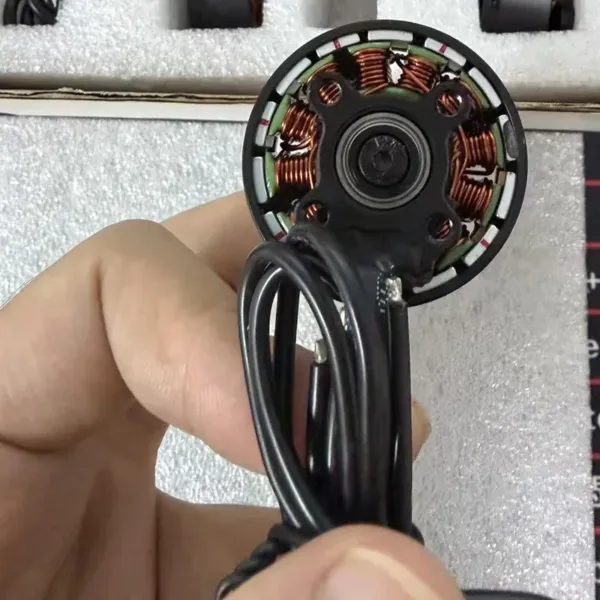
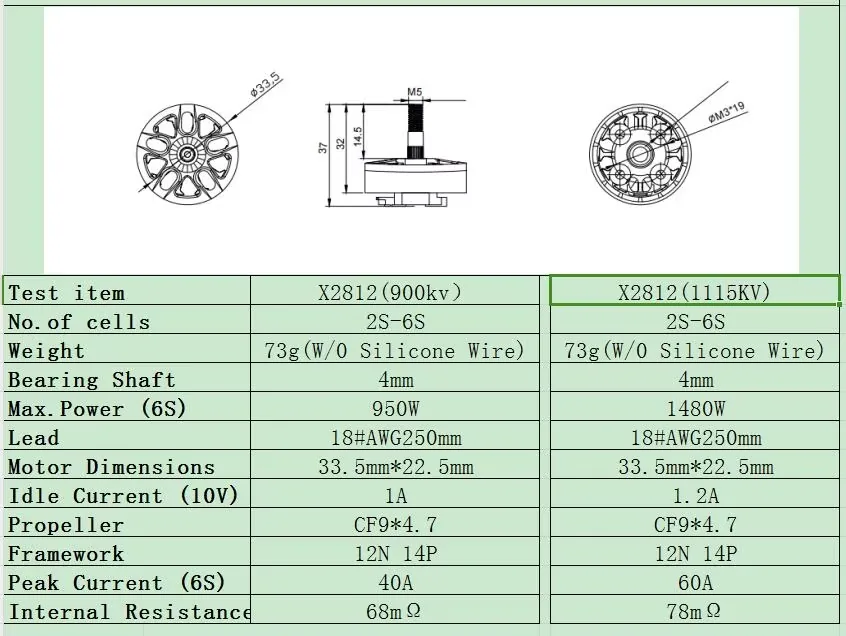
And the X2812 spec sheet, showing the 900KV and 1115KV versions:
X2807 vs X2812: Which Should You Choose?
Choose the X2807 for a 6-7 inch long-range or cinematic build where every gram counts — it is 24 g lighter per motor, which is 96 g on a quad, and it swings 6-7 inch props efficiently on 6S. Choose the X2812 when you need to swing 9-inch props or carry more payload; the taller stator handles bigger loads, but the extra 73 g per motor means your frame and battery need to make up the difference.
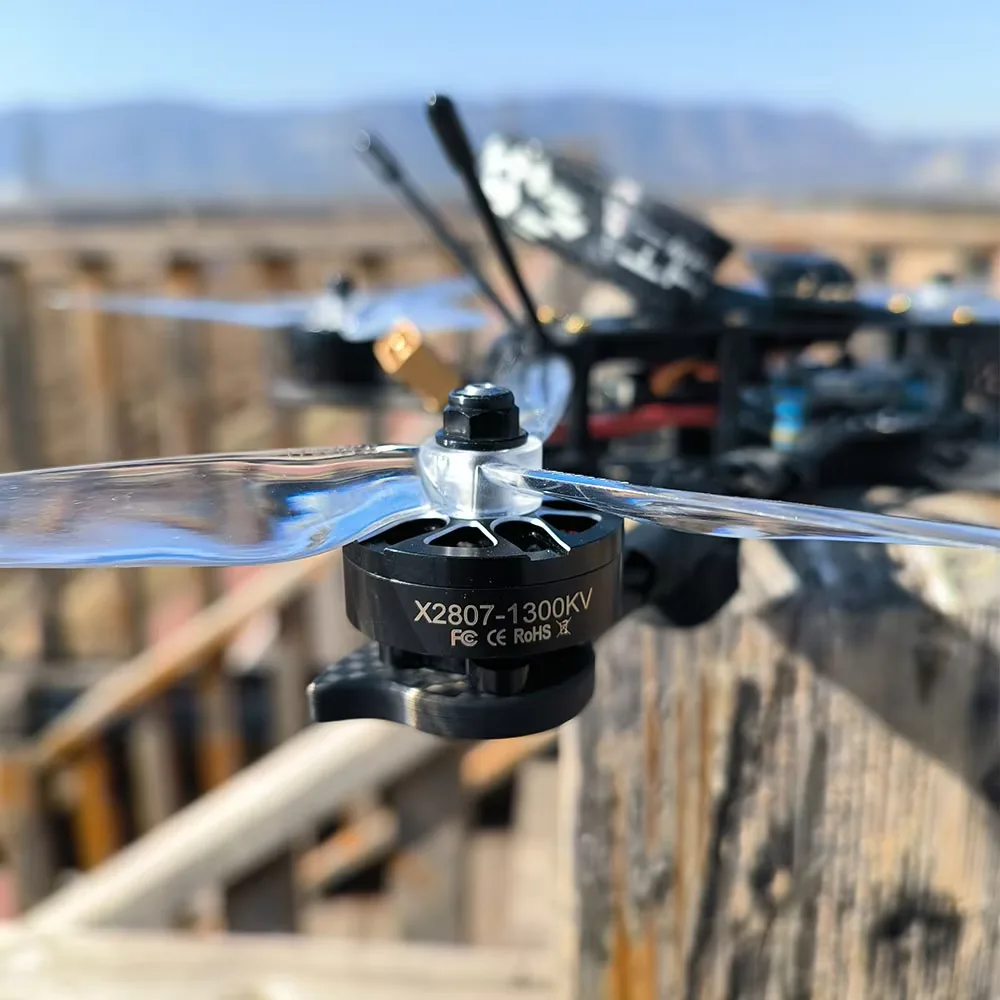
Here is the X2807 in action on a real build — note the transparent propeller and the compact profile:
How to Read a Motor Spec Sheet Like a Builder
Most buyers only look at KV and weight, but four numbers decide whether a motor fits your build:
- Max power and peak current — check your ESC can deliver the peak current (the X2807 peaks at 55A, so a 60A+ ESC is the safe choice).
- Idle current — the X2807 at 1300KV draws 1A idle at 10V; a motor with much higher idle current wastes energy as heat.
- Internal resistance — lower is better for efficiency under load; the X2807 runs 45–60 mΩ depending on KV.
- Propeller range — never fly a prop outside the rated range; you will overheat the motor or stall the ESC.
These are the numbers our factory measures on every batch — and the ones that separate a 500-flight motor from a 20-flight one. For more on how outrunners are built and what quality checks matter, see How Outrunner Motors Are Made.
FPV Motor Selection by Build Type
- 5-inch racing: 2207 / 2306, 1700–2000KV on 4S — see our FPV racing and freestyle motors
- 6-7 inch long range: 2807, 1300KV on 6S — how to choose FPV motors for 6S long range
- 7-9 inch heavy lift: 2812 / 3110 / 3115, 900KV and below — long range FPV motors
FPV Motor Wiring and Setup Basics
Brushless FPV motors use three phase wires, and swapping any two of them reverses the spin direction — a useful trick when you are wiring a quad and one motor spins the wrong way. Most builds follow the “opposite corners, opposite rotation” pattern: motors 1 and 4 spin one way, motors 2 and 3 spin the other, so the quad is stable in flight.
Three setup checks before your first flight:
- ESC rating — match ESC amp rating to the motor peak current. An X2807 peaking at 55A needs at least a 60A ESC (or 55A continuous-rated) to avoid brownouts.
- Prop direction — install CW and CCW propellers on the matching motors; a reversed prop turns the quad into a lawn dart.
- Motor timing and demag — leave BLHeli timing on auto for most FPV motors; only raise it if the motor stutters at full throttle.
If a motor runs hot after a flight, check the propeller for damage, verify the KV matches the battery, and confirm the ESC is not over-propped. A warm motor is normal — a motor too hot to touch for more than a few seconds is not.
Common FPV Motor Mistakes and How to Avoid Them
- Over-propping — running a bigger prop than the motor rating cooks the windings. Stick to the rated propeller range on the spec sheet.
- Under-rated ESC — a 30A ESC on a 55A-peak motor fails at full throttle. Always size the ESC above peak current.
- Ignoring weight — a 73g motor sounds “stronger”, but on a long-range build that extra 24g per corner shortens flight time noticeably.
- Mismatched KV and battery — a 1700KV motor on 6S spins far beyond its design range; heat and demagnetization follow.
- Loose bell or bent shaft — check for play in the bell before mounting; vibration at speed destroys bearings and flight controllers.
For a full walkthrough of the manufacturing and quality side — magnet grade, lamination, balancing and what to check when a batch arrives — read How Outrunner Motors Are Made.
Frequently Asked Questions
What does 2207 mean on an FPV motor?
It is the stator size: 22 mm stator diameter and 7 mm stator height. The first two digits are diameter, the last two are height.
What KV is best for FPV?
For 5-inch quads on 4S, 1700–2000KV is the sweet spot. For 6-7 inch long range on 6S, use 900–1300KV. Higher KV suits smaller props, lower KV suits bigger props.
Is 1300KV good for 6S?
Yes — 1300KV on 6S is a proven long-range combination for 6-7 inch props, giving efficient cruise and good climb authority.
X2807 or X2812 — which is better?
For 6-7 inch builds, the X2807 saves 24 g per motor and swings 6-7 inch props efficiently. For 9-inch props or heavy payloads, the X2812 has the torque. Choose by propeller size and weight budget.
What is the difference between 2207 and 2306 motors?
2207 is taller (7 mm stator) and suits racing; 2306 is wider (23 mm stator) and slightly heavier, often preferred for freestyle and cinewhoop because of smoother torque delivery.
Can I order FPV motors wholesale or OEM?
Yes. Yadovex supplies FPV motors from 2207 to 4215, with custom KV, shaft and wire options for OEM and bulk orders.
Final Verdict
Read the stator size first, match KV to your battery and propeller, then check peak current against your ESC. For most 6-7 inch long-range builds the X2807 at 1300KV is the balanced choice; step up to the X2812 only when you need to swing 9-inch props or carry real payload.
Need help picking FPV motors for your build? Yadovex supplies FPV motors from 2207 to 4215 with custom KV and OEM options. Contact us with your frame, battery and propeller, or message us on WhatsApp.

Hallen Liu is a product and sourcing specialist at Yadovex, a China-based supplier of FPV and UAV brushless motors, servos and propellers. He works directly with drone builders, distributors and OEM buyers on motor selection, thrust-test data, custom KV and OEM/ODM orders — from sample validation through repeat bulk shipments.