Brushless vs Brushed Servo: Which Type Should You Choose?
A brushless servo replaces the DC motor inside a standard servo with a sensorless brushless motor, while a brushed servo uses the classic DC motor with brushes and commutator. For most buyers, brushless servos win when you need torque holding, speed, waterproofing or long life — at a higher price. Brushed servos still make sense for micro sizes, light loads and budget builds where 9–25kg of torque is enough.
Quick Answer: Brushless vs Brushed Servo
- Brushless servo: no brushes to wear, more torque at the same size, faster response, quieter, often IP67 waterproof — costs more.
- Brushed servo: cheaper, proven, easy to repair — but brushes wear out, current draw is higher, and sealing is weaker.
- Both receive the same PWM signal and work with any standard receiver; the difference is inside the motor.
- Choose brushless for waterproof or heavy-duty use (boats, crawlers, robots); choose brushed for micro and budget servos.
What Is a Brushed Servo?
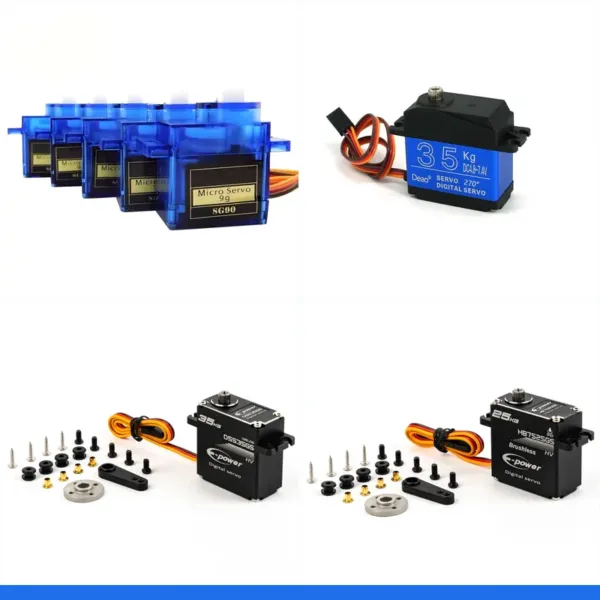
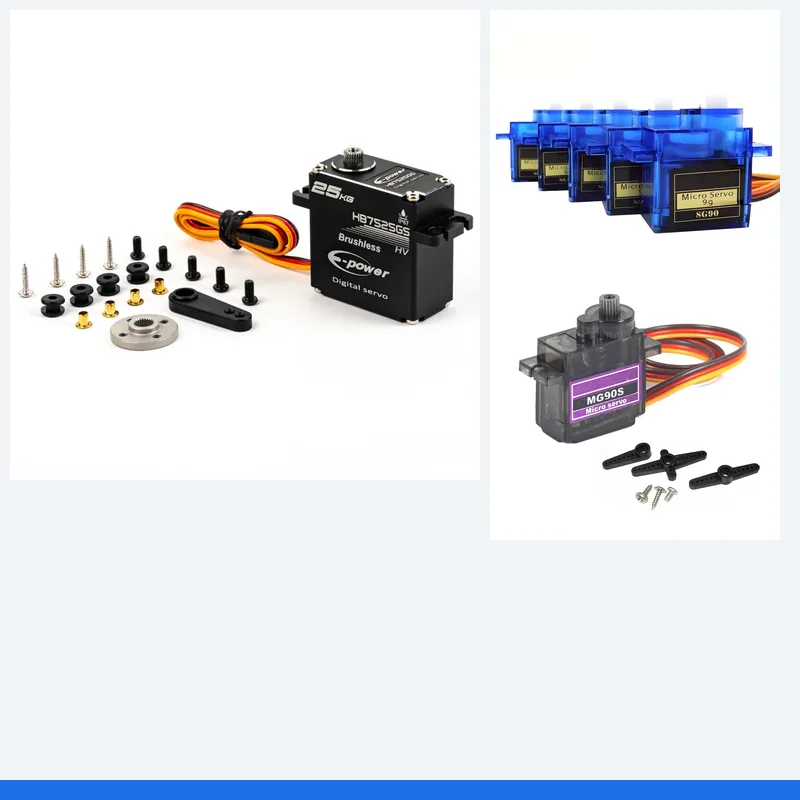
A brushed servo contains a small DC motor with carbon brushes and a commutator. When the motor spins, the brushes rub against the commutator to switch the winding current. This is the classic design found in SG90, MG90S and most MG-series servos. It is cheap, simple and fully understood — but the brush contact wears over time and limits the motor’s peak current and efficiency.
What Is a Brushless Servo?
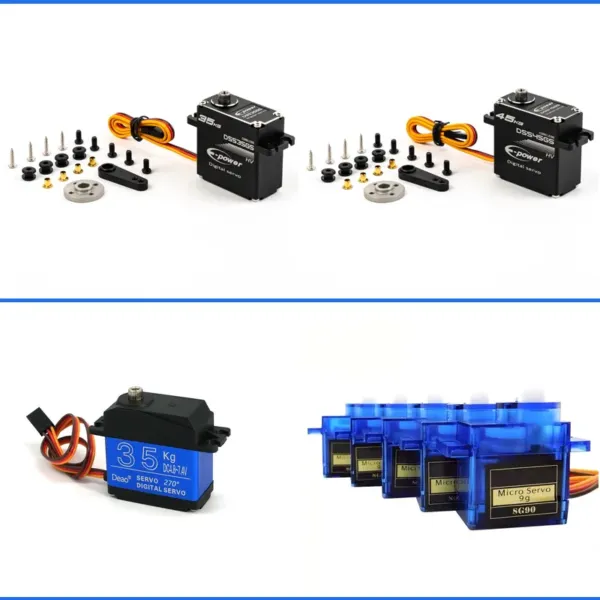
A brushless servo uses a sensorless three-phase motor controlled by the servo’s driver board. There are no brushes and no commutator: the driver electronically switches the phases. This removes the wear point, lets the motor push more current without arcing, and makes sealing much easier — which is why almost all waterproof and high-voltage servos are brushless. Yadovex brushless lines such as the HB25KG, HB35KG and HB45KG are IP67-rated and built for boats, crawlers and robot arms.
Brushless vs Brushed Servo: Key Differences
| Property | Brushed Servo | Brushless Servo |
|---|---|---|
| Motor internals | DC motor with brushes + commutator | Sensorless 3-phase brushless motor |
| Lifespan | Brushes wear, needs replacement | No brush wear, much longer life |
| Torque holding | Good, limited by brush current | Stronger at same size |
| Speed / response | Slower, higher latency | Faster, sharper response |
| Waterproofing | Hard to seal fully | Easily sealed, often IP67 |
| Price | Low | Higher |
| Typical use | Micro servos, hobby planes, budget cars | Boats, crawlers, robot arms, heavy RC |
Real Servo Examples at Yadovex
| Servo | Type | Torque | Best for |
|---|---|---|---|
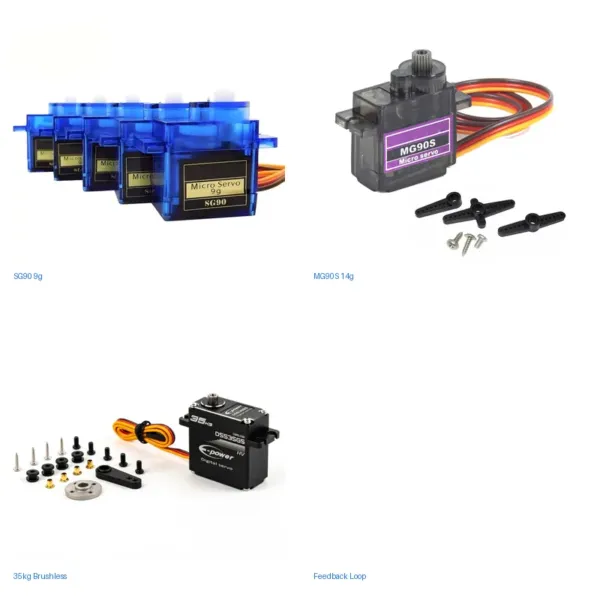
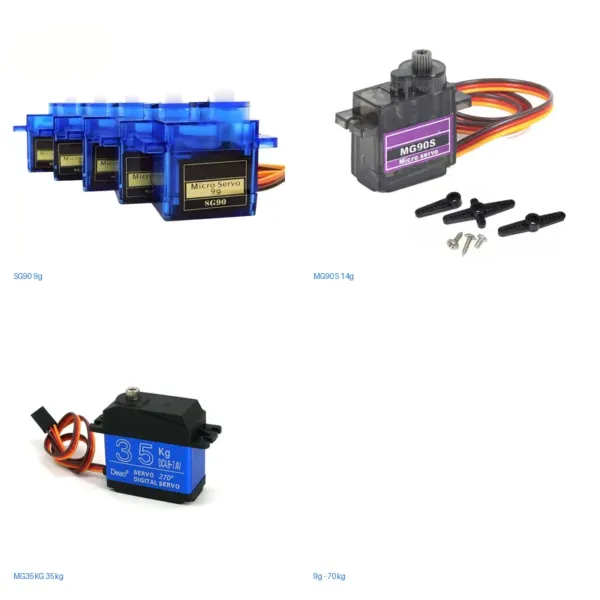
| SG90 9g | Brushed | ~1.8kg | Micro planes, small models |
| MG90S 14g | Brushed | ~2.2kg | Robot arms, small RC |
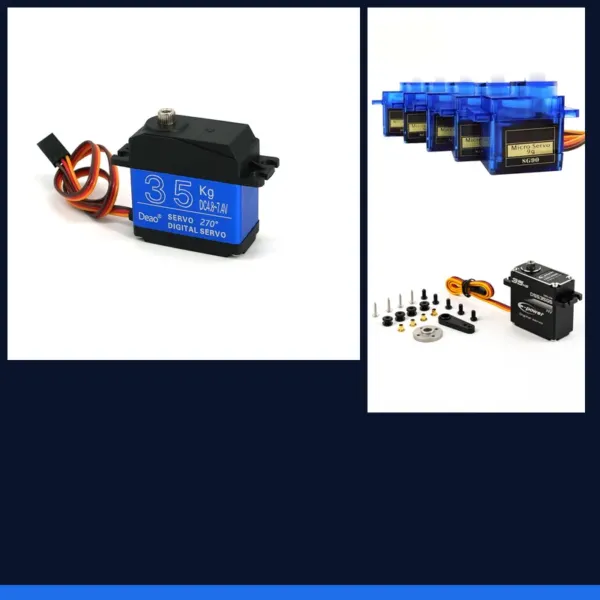
| MG35KG | Brushed (digital) | 35kg | RC cars, crawlers |
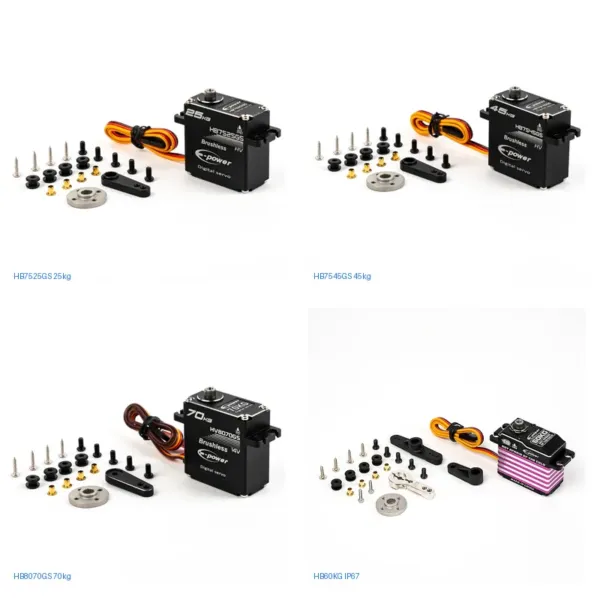
| HB35KG | Brushless | 35kg | Boats, cars, IP67 |
| HB45KG | Brushless | 45kg | Heavy crawlers, robot arms |
| HB7525GS | Brushless | 25kg | Robots, 180/270/360° options |
Which One Should You Choose?
Answer three questions:
- Will it get wet? Boats, underwater ROVs, wet crawlers: brushless (IP67). Brushed servos are not reliably waterproof.
- What torque class do you need? Under 25kg and low duty cycle: brushed is fine and cheap. Above 25kg with sustained holding: brushless holds better without overheating.
- How long should it last? Production robots and commercial gear: brushless pays back its higher price in lifespan. Hobby builds: brushed is the economical choice.
Factory Perspective: What the Build Quality Difference Means
Two servos with the same “35kg” label can behave very differently. The brushless/brushed choice is only the first layer; the second layer is how the factory builds it:
- Coreless vs cored motors: coreless brushed servos such as the D5535GS respond faster than standard cored motors, closing part of the gap to brushless.
- Gear material: full steel gears (MG30KG, MG35KG) survive crash loads; metal-copper gears (MG20KG, MG25KG) are quieter but softer.
- Sealing: real IP67 needs dual gaskets and a sealed output shaft — check the rating, not the marketing words.
- Deadband and centering: factory-set deadband of 1–2µs separates a servo that centers crisply from one that hunts.
Ask your supplier for the deadband spec and IP rating test result, not just the torque number. This is the fastest way to separate real brushless servos from relabeled brushed units.
FAQ
Are brushless servos worth the extra cost?
Yes when the servo must be waterproof, run continuously, or hold torque under load for long periods. For occasional hobby use, a brushed digital servo is usually enough.
Can I use a brushless servo with my existing receiver?
Yes. Brushless servos accept the same standard 1–2ms PWM signal and work with any receiver; the driver board inside handles the brushless commutation.
Are brushless servos faster than brushed?
Generally yes at the same torque class, because the driver can push higher current without brush arcing. Response and holding torque both improve.
Why are waterproof servos always brushless?
Sealing a brushed motor is difficult because the brush/commutator area needs access. Brushless motors have no such opening, so IP67 sealing is practical.
Do brushless servos draw less current?
Usually yes at the same torque, because efficiency is higher and no brush friction is lost. Peak current can still be high, so use a good BEC.
What voltage do brushless servos need?
Most run 6.0–8.4V; high-voltage brushless servos accept up to 12V or more. Check the label — feeding 12V to a 6V servo burns it.
Final Verdict
For waterproof, heavy-duty or continuous-use applications, buy a brushless servo — the IP67 sealing, longer life and sharper holding justify the price. For micro sizes, light planes and budget builds, a brushed digital servo is still the right call.
If you are building a boat, crawler or robot arm and want a servo that survives water and hard use, the HB45KG or HB7525GS are strong starting points. Tell us your application, torque and voltage, and we will match the right servo within 24 hours: Contact us or message us on WhatsApp at wa.me/message/POYYRKPKH4VMA1.

Hallen Liu is a product and sourcing specialist at Yadovex, a China-based supplier of FPV and UAV brushless motors, servos and propellers. He works directly with drone builders, distributors and OEM buyers on motor selection, thrust-test data, custom KV and OEM/ODM orders — from sample validation through repeat bulk shipments.