How to Choose a Servo Motor: Size, Torque, Voltage and Type Guide
To choose a servo motor, match five things in order: size class, torque, voltage, motor type and waterproofing. Start with the physical space (9g micro to 45kg+ heavy), then the torque your application needs, then the voltage your system supplies, then decide brushed/coreless/brushless, and finally whether you need IP waterproofing. A 35kg servo for a crawler, a 9g servo for a micro plane and a 45kg IP67 servo for a boat are different machines — pick by application, not by price.
Quick Answer: How to Choose a Servo
- 1. Size class: 9g micro servos for small models, 20–35kg for RC cars/crawlers, 35–55kg+ for heavy robot arms and boats.
- 2. Torque: estimate the force needed at the horn; add 30–50% margin for safety.
- 3. Voltage: match to your BEC/receiver (4.8–6V, 6–7.4V, or high-voltage up to 8.4–15V).
- 4. Motor type: brushed (cheap, standard), coreless (faster), brushless (fastest, longest life, IP67-capable).
- 5. Waterproofing: IP67 brushless servos for boats, crawlers and outdoor use.
Step 1: Pick the Size Class
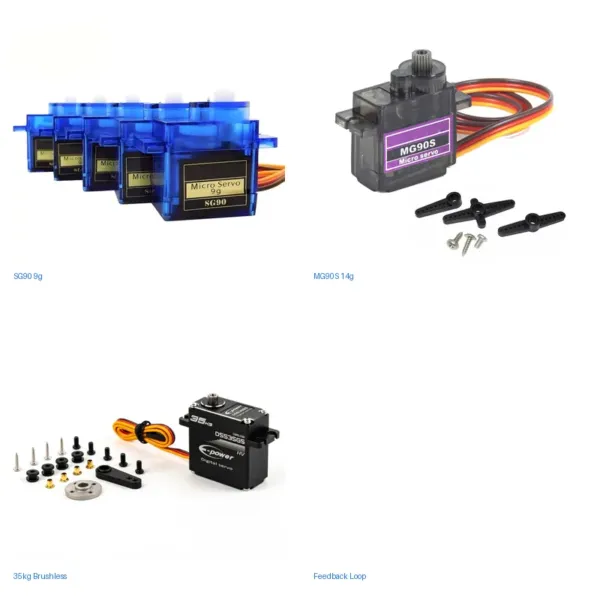
Servo size is usually expressed by case size and weight. The practical classes at Yadovex:
| Size class | Weight | Typical torque | Applications |
|---|---|---|---|
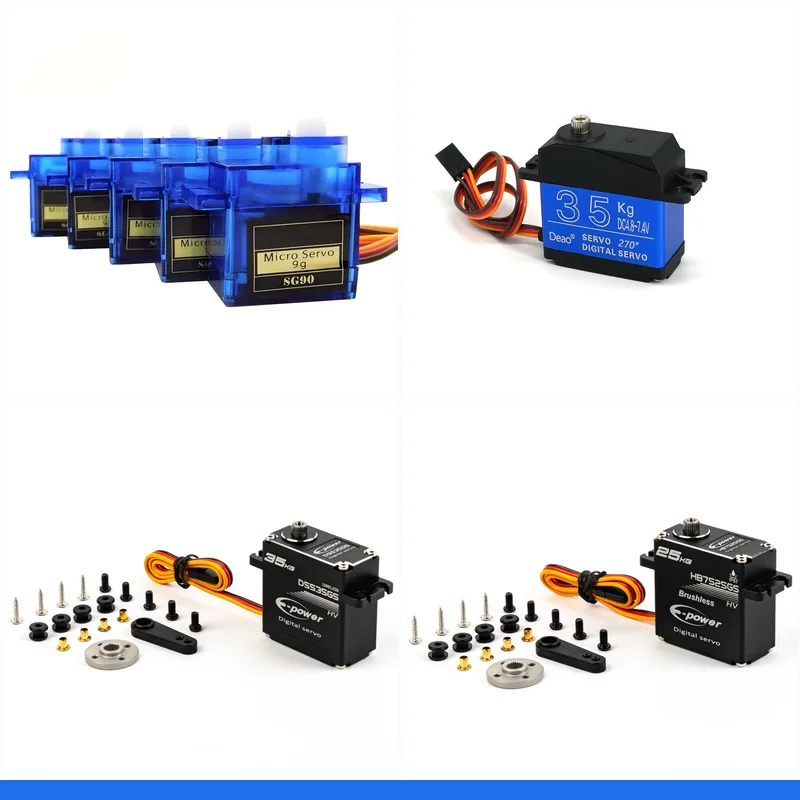
| Micro | 9–14g | 1.8–2.2kg·cm | Micro planes, small models, light robot arms |
| Standard | 40–60g | 5–15kg·cm | Sport planes, gliders, cars |
| High torque | 60–80g | 20–35kg·cm | RC cars, crawlers, robot arms |
| Heavy duty | 80–130g | 35–55kg·cm | Boats, heavy crawlers, bionic hands |
Step 2: Estimate the Torque You Need
Torque (kg·cm) is the force the servo can hold at the output horn. For a control surface, estimate the aerodynamic force and lever length; for a robot arm, estimate the load at the longest reach. A common rule: choose a servo rated at 1.5× your estimated peak load so it holds position without hunting or stalling.
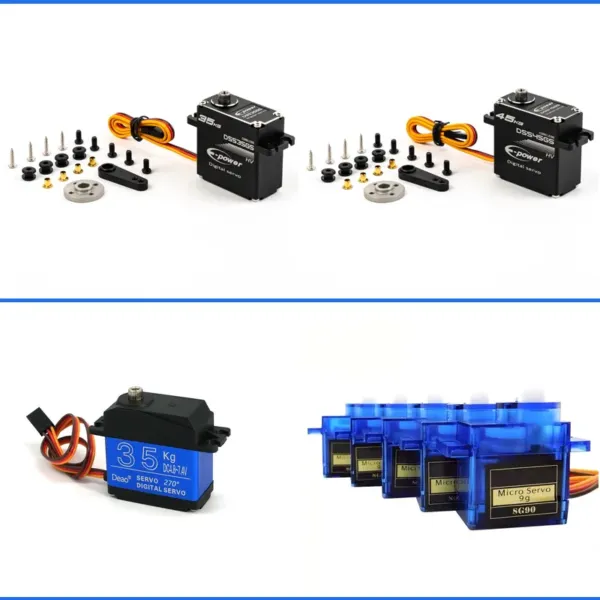
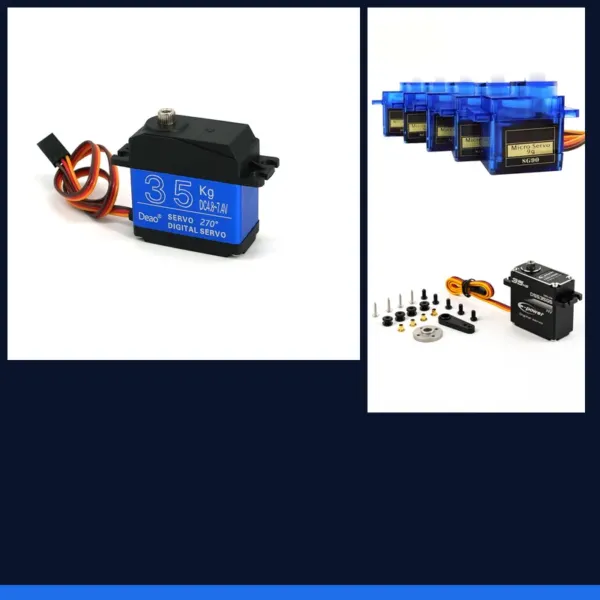
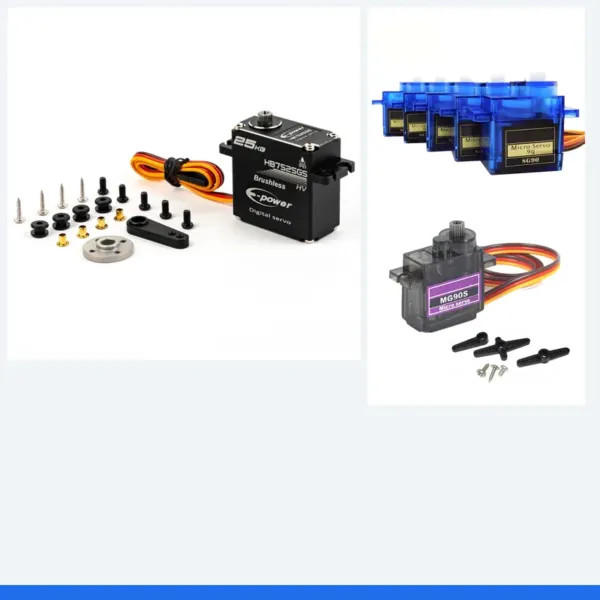
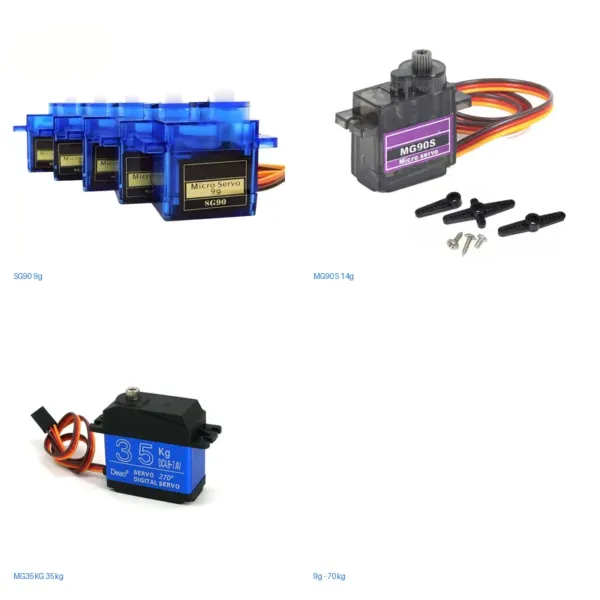
Concrete examples from the Yadovex range: a SG90 9g (~1.8kg·cm) suits a small elevator or rudder; a MG35KG (35kg·cm) drives crawler steering or a heavy robot arm joint; a HB45KG (45kg·cm, IP67) handles a boat rudder in salt water.
Step 3: Match the Voltage
Servos are rated for a voltage range, and higher voltage gives more torque and speed — up to the rated maximum. Match the servo to your power system:
- 4.8–6V: standard servos, run from a 5V BEC or receiver.
- 6–7.4V: digital and high-performance servos (most Yadovex MG and coreless lines).
- 6–8.4V: brushless servos such as the D5535GS and HB series.
- High voltage (up to 12–15V): high-voltage servos for UAV and industrial use.
Never feed a servo above its rated voltage — it burns the board. If your BEC is 7.4V, buy servos rated for at least 7.4V.
Step 4: Choose the Motor Type
| Motor type | Speed/response | Life | Waterproof | Best for |
|---|---|---|---|---|
| Brushed (standard) | Good | Brushes wear | Hard to seal | Budget, micro, hobby |
| Coreless | Fast | Longer | Some models sealed | Racing, fast response |
| Brushless | Fastest | Longest | IP67 easy | Waterproof, heavy duty, robots |
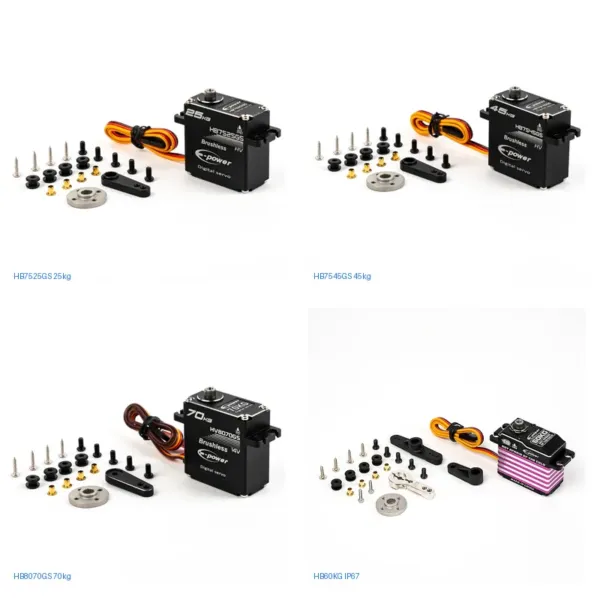
Brushless servos such as the HB brushless waterproof series win for boats, crawlers and robot arms that must run wet or continuously. Coreless servos such as the D5545GS give a fast response for racing. Brushed servos are the economical choice for micro and hobby use.
Step 5: Decide on Waterproofing
If the servo will see water, mud or condensation, choose an IP67 waterproof servo. A truly sealed servo needs dual gaskets and a sealed output shaft — check the IP rating, not the marketing text. Yadovex waterproof lines cover waterproof digital servos and the IP67 brushless waterproof series.
Application Quick-Reference Table
If you are not sure where to start, use this table to jump straight to the right class:
| Application | Torque class | Motor type | Voltage | Example |
|---|---|---|---|---|
| Fixed-wing elevator/rudder | 2–10kg·cm | Brushed/digital | 4.8–6V | SG90, MG90S |
| RC car steering | 10–25kg·cm | Digital | 6–7.4V | MG20KG, MG25KG |
| RC crawler | 25–35kg·cm | Digital, steel gear | 6–7.4V | MG35KG |
| Boat rudder (water) | 35–55kg·cm | Brushless IP67 | 6–8.4V | HB45KG |
| Robot arm / bionic hand | 20–45kg·cm | Digital or brushless | 6–8.4V | MG series, HB7525GS |
| Racing / fast response | 20–45kg·cm | Coreless | 6–8.4V | D5535GS |
| UAV / industrial | 45kg+ | High-voltage brushless | 8.4–15V | HV series |
Installation and Wiring Basics
A good servo fails early if it is installed wrong. Five points that matter more than most people think:
- Power the servo, not the receiver alone: high-torque servos draw 1–3A peaks. Use a BEC rated for the total current, or the voltage sags and the servo twitches.
- Set the servo endpoints: avoid driving the horn past the mechanical limit — it stalls the motor and strips gears. Set EPA/endpoints in the radio or controller.
- Use the right horn arm: a longer arm multiplies torque at the expense of speed and increases the load; keep the arm as short as the application allows.
- Seal the output shaft: for IP67 claims to hold, the output shaft seal and case gasket must both be intact; re-check after crash repairs.
- Check centering before install: power the servo on a test rig, confirm it centers, then mount it. A mis-centered servo fights the linkage all day.
Factory Perspective: What Separates a Good Servo
Two servos with the same “35kg” label can behave very differently. When buying, check these factory-level details:
- Gear material: full steel gears survive crash loads; metal-copper gears are quieter but softer.
- Deadband: a factory-set deadband of 1–2µs separates a servo that centers crisply from one that hunts.
- KV-style consistency: servos from the same batch should have matched speed and centering.
- Certifications: ask for the IP test report and torque test data, not just the label.
FAQ
How much torque do I need for my servo?
Estimate the peak load at the horn and multiply by 1.5. For a small plane elevator, 2–3kg·cm is plenty; for a crawler or robot arm, 20–45kg·cm.
What voltage should I run my servo at?
Match the servo’s rated range. Standard servos run 4.8–6V; digital and coreless servos run 6–7.4V; brushless and high-voltage servos run up to 8.4V or more.
Are brushless servos worth it?
Yes for waterproof, heavy-duty or continuous use — they last longer, hold torque and seal to IP67. For occasional hobby use, a brushed digital servo is enough.
Can I use a 9g micro servo in a robot arm?
Only for very light loads. For robot arms, use 20kg+ servos with metal or steel gears, such as the MG series.
What is the difference between analog and digital servos?
Digital servos update the control loop at 300–500Hz instead of ~50Hz, giving faster response and stronger holding torque, at higher current draw.
How do I know if a servo is truly waterproof?
Check for an official IP rating (IP67), not just “waterproof” text. Look for sealed output shafts and dual gaskets; brushless servos seal most reliably.
Final Verdict
Choose in this order: size class → torque → voltage → motor type → waterproofing. For most RC and hobby builds, a digital servo with metal gears in the right torque class is the safe pick; upgrade to coreless for speed, brushless IP67 for wet or heavy duty.
Tell us your application, torque and voltage, and we will match the right servo within 24 hours: Contact us or message us on WhatsApp at wa.me/message/POYYRKPKH4VMA1.

Hallen Liu is a product and sourcing specialist at Yadovex, a China-based supplier of FPV and UAV brushless motors, servos and propellers. He works directly with drone builders, distributors and OEM buyers on motor selection, thrust-test data, custom KV and OEM/ODM orders — from sample validation through repeat bulk shipments.