What Is KV on a Brushless Motor? KV Rating Explained for Drones
KV on a brushless motor means revolutions per minute per volt (RPM/V) at no load. A 1300KV motor spins at roughly 1,300 RPM for every volt you apply: on a fully charged 4S pack (16.8V) it reaches about 22,000 RPM at no load. KV is not power, not torque and not “strength” — it only describes the speed-to-voltage relationship of the motor.
Quick Answer: What Is KV?
- KV = RPM per Volt at no load. 900KV × 22.2V (6S) ≈ 20,000 RPM; 1300KV × 16.8V (4S) ≈ 22,000 RPM.
- Higher KV spins faster at the same voltage and suits small, high-RPM props.
- Lower KV produces more torque per amp at lower speed and suits large, slow-turning props.
- KV is determined by the motor winding, not by size: a 2807 and an X4215 can both be wound to 900KV.
- Pick KV by battery voltage first, then by prop size — never by “more KV = more power”.
KV Is Not Power: The Biggest Misunderstanding
Beginners read “1300KV” as “1300 watts” or “more KV = stronger motor”. Neither is true. KV only sets the speed range of the motor at a given voltage. Power is decided by how much current the ESC and battery can push, which depends on motor size, prop load and voltage.
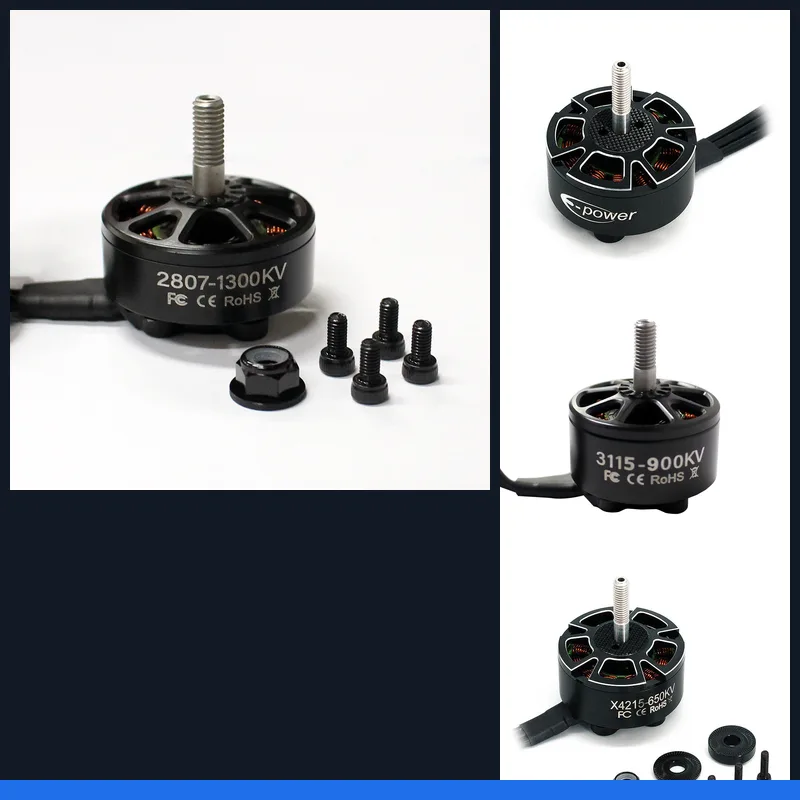
A 2807-1300KV and a 2807-900KV are the same physical size and can handle similar power. The 1300KV version just reaches its peak efficiency at higher RPM (smaller prop, lower cell count), while the 900KV version peaks at lower RPM (larger prop, higher cell count). Same stator, same power class, different speed windows.
The KV Formula
KV is measured at no load with a known voltage:
| Quantity | Formula | Example |
|---|---|---|
| KV | No-load RPM ÷ Voltage | 21,000 RPM ÷ 16.8V = 1,250KV |
| No-load RPM | KV × Voltage | 900KV × 22.2V ≈ 20,000 RPM |
| Loaded RPM | KV × Voltage × efficiency (roughly 75–85%) | 1,300KV × 16.8V × 0.8 ≈ 17,500 RPM under load |
Real-world loaded RPM is always lower than the no-load number because the propeller drags the motor down. Use the loaded figure when matching props to motors.
Common KV Ranges and Battery Matching
| Battery | Typical KV | Prop size | Yadovex example |
|---|---|---|---|
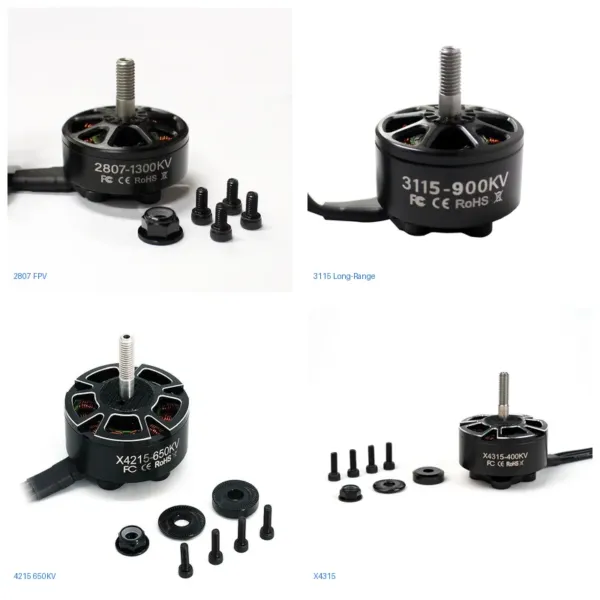
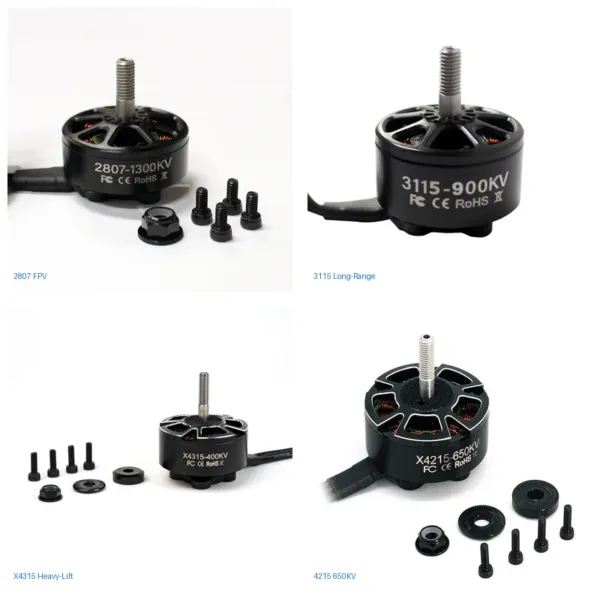
| 3S–4S | 1,400 – 1,700 KV | 3–5 inch | 2807-1500KV, 2807-1700KV |
| 4S–6S | 1,200 – 1,400 KV | 5–6 inch | 2807-1300KV |
| 6S | 900 – 1,100 KV | 7–9 inch | 2807-900KV, 2812-900KV |
| 6S–8S | 400 – 650 KV | 12–13 inch | 4215-650KV, X4215-400KV |
Read the pattern: as voltage rises, KV must drop to keep the motor in its efficient RPM band. Doubling the cell count roughly halves the KV you need.
High KV vs Low KV: How to Choose
High KV (1,400+) gives high no-load speed, which suits small props and racers that want RPM. Low KV (400–900) gives the same power at lower speed with higher torque per amp, which suits large props and long-range or heavy-lift rigs that want efficiency.
The common mistake is choosing KV before choosing prop size. Do it in the opposite order: fix the prop diameter from your frame and thrust target, then pick the KV that lands that prop in the motor’s efficient RPM band for your battery voltage.
KV Tolerance: What the Factory Knows (and Cheap Brands Hide)
Two motors with the same “900KV” label can actually measure 850KV and 950KV. That 10% spread changes current draw, heat and thrust — and on a quad, four mismatched motors pull the aircraft sideways under throttle.
- KV tolerance ±5% vs ±10%: matched sets fly straight; loose sets fight the flight controller.
- Every Yadovex motor is individually KV-tested before packing; the measured value is what ships, not a “typical” number.
- KV is set by the winding: more turns = lower KV, fewer turns = higher KV. The same stator can be wound for 900KV or 1,300KV.
- Magnet grade and lamination thickness change how efficiently the motor holds that KV under load, which is why identical KV from different factories performs differently.
When ordering a batch, ask for the measured KV range of the set, not just the label. This is the single cheapest way to buy consistent performance.
How to Pick KV in 3 Steps
- Set the battery first. 4S, 6S or 8S fixes the voltage you will feed the motor.
- Set the prop second. Frame size and thrust target decide the prop diameter.
- Match KV to both. Use the table above; if you are between two KV values, choose the lower one for efficiency or the higher one for punch — then verify with the loaded RPM formula.
FAQ
Does higher KV mean more power?
No. KV is speed per volt, not power. Power comes from motor size and the current the ESC and battery can deliver.
Does KV affect flight time?
Indirectly. A KV matched to your prop and battery runs in its efficient band, which gives the longest flight time. An over-propped or under-volted setup wastes energy as heat.
Is KV the same as torque?
No. Torque is decided by motor size (stator volume and magnets), not KV. Low KV motors feel torquier mainly because they turn big props slowly.
Can I change the KV of a motor?
Only by rewinding the stator, which is not practical for FPV motors. Buy the KV you need; do not plan around rewinding.
Why do two 900KV motors perform differently?
KV tolerance, magnet grade, lamination thickness and bearing quality differ between factories. Ask for measured KV of the actual batch.
What KV is best for a 5-inch quad?
For 4S, 1,400–1,700 KV (e.g. 2807-1500KV or 2807-1700KV); for 6S on a 5-inch, a 1,300KV class motor such as the 2807-1300KV.
Final Verdict
Think of KV as the gear ratio of a brushless motor: it sets the speed window, not the strength. Choose battery first, prop second, KV third — and buy from a factory that publishes measured KV tolerance, because matched motors are what make a drone fly straight.
If you are choosing motors for a build, send us your frame size, prop diameter and battery voltage, and we will recommend a KV within 24 hours: Contact us or message us on WhatsApp at wa.me/message/POYYRKPKH4VMA1.

Hallen Liu is a product and sourcing specialist at Yadovex, a China-based supplier of FPV and UAV brushless motors, servos and propellers. He works directly with drone builders, distributors and OEM buyers on motor selection, thrust-test data, custom KV and OEM/ODM orders — from sample validation through repeat bulk shipments.